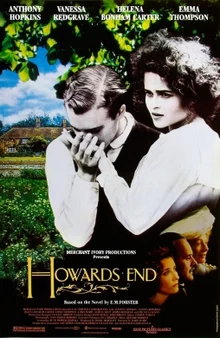
James Ivory's Howards End stands as a landmark achievement in cinema, representing not only the director's deft touch with adaptations but also a significant moment in the early 1990s film landscape. Known for his ability to marry aesthetics with profound themes, Ivory’s work in Howards End aligns closely with the masterful storytelling of E.M. Forster while capturing the political and social ethos of Edwardian England. The film, created in collaboration with screenwriter Ruth Prawer Jhabvala and producer Ismail Merchant, is a quintessential example of their celebrated partnership that consistently delivers nuanced explorations of complex characters and societal paradigms.
Critical consensus around Howards End reveals a tapestry woven with themes of class conflict, love, and the often-ambiguous nature of property rights. The film intricately examines the lives of the Wilcox, Schlegel, and Basts families, showcasing the tensions and interconnections that arise from their differing social standings. Ivory effectively renders the backdrop of early 20th-century England with sensitivity, framing the narrative within the larger context of social change. The film’s exploration of familial dynamics and romantic entanglements reflects Forster’s intentions, revealing how personal relationships are inextricably linked to societal structures.
The cinematography in Howards End is nothing short of gorgeous, with lush settings that evoke a sense of tranquility while simultaneously serving as a battleground for the fierce class conflicts inherent in the narrative. Ivory's directorial style remains graceful and assured, employing a pacing that allows viewers to appreciate the film’s exquisite details while also contemplating its deeper meanings. The performances by the cast, particularly Emma Thompson, Anthony Hopkins, and Helena Bonham Carter, are authentic and layered, contributing to a narrative that feels both timeless and fresh.
Reviewers have described the film as intelligent and witty, highlighting its ability to tackle serious themes without sacrificing emotional depth. The balance of tones, ranging from the romantic to the fussy, creates a rich viewing experience that both engages and provokes thought. This nuanced approach allows Howards End to transcend the era it depicts, reflecting timeless struggles that resonate with modern audiences. Its exploration of sorting through complex familial legacies and social expectations continues to resonate today, affirming Ivory’s place in cinematic history as a storyteller capable of crafting both visually stunning and intellectually engaging narratives.
In the context of cinema history, Howards End is often revered for its substantial contributions to the genre of literary adaptations. It paved the way for similar films in the ensuing decades, solidifying the notion that classic literature can find new life through sensitive and thoughtful cinematic interpretations. The film's aesthetic and thematic richness, combined with its critical acclaim, cements its status as a vital work within Ivory's accomplished oeuvre, showcasing not just the allure of the past but the enduring impact of human connection in all its complexities.