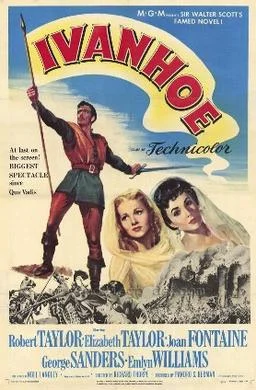
Ivanhoe, directed by Richard Thorpe in 1952, stands as a significant entry in the canon of early cinematic adaptations of historical narratives. Released during a period when Hollywood was enamored with lavish productions and sweeping epics, Ivanhoe showcases the chivalric ideals and romantic entanglements prevalent in the genre. Thorpe, best known for his ability to blend spectacle with engaging storytelling, delivers a film that both honors Sir Walter Scott's 19th-century novel and reflects the larger cultural fascination with medieval adventure during the post-war era.
The film's critical reception acknowledges its ambitious scope and grandeur, with reviewers often highlighting the extravagant set designs and costumes that transport audiences to the Middle Ages. This visual opulence, coupled with an enthralling narrative, invites viewers to immerse themselves in a world where knights uphold honor and love is as dangerous as it is desired. The interplay of romance and adventure, as embodied by the central character of Ivanhoe and his relationships with Rebecca and Rowena, illustrates the complexities of love against a backdrop of societal expectations and turbulent times.
At its core, Ivanhoe engages with themes of chivalric ideals and heroism, exploring the manner in which individual characters navigate issues of loyalty, justice, and honor. Thorpe's direction emphasizes not only the physical quests of his protagonists but also their moral journeys. The film grapples with the notion of honor in a feudal society, replete with villainy and conflict, which resonates with audiences seeking not just entertainment but also a reflection on contemporary values.
In the broader context of cinema history, Ivanhoe is a notable entry in the wave of films that sought to redefine the adventure genre, paving the way for future adaptations that similarly blend romance with historical motifs. It delivers a nuanced portrayal of its characters, allowing for moments of introspection amidst the action-packed sequences. Thus, while the film thrives on its lavish production and romantic escapades, it also quietly invites discourse on the ideals of chivalry and the human condition, creating a multifaceted viewing experience that continues to resonate with audiences.