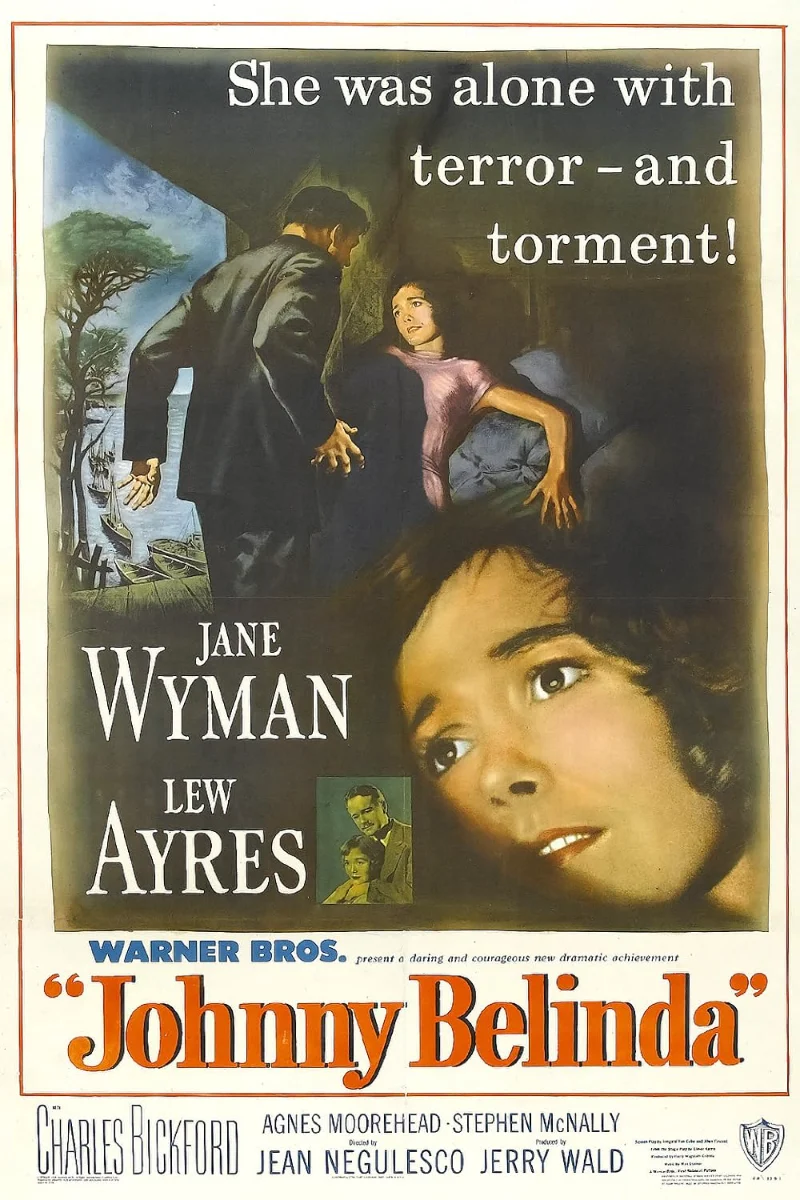
Directed by Jean Negulesco, Johnny Belinda is a landmark film from 1948 that resonates deeply within the canon of American cinema, particularly for its groundbreaking treatment of disability and sexual assault. As part of a wave of socially conscious films emerging post-World War II, the film stands out for its compelling narrative and emotional depth. Negulesco, known for his sensitive storytelling and nuanced character explorations, utilized the film to tackle complex societal issues, showcasing his ability to combine dramatic storytelling with cultural critique. The film is distinguished not only for its thematic daring but also for its critical acclaim, cementing its status as a pivotal work in the director's oeuvre.
The story centers on Belinda McDonald, a deaf-mute woman portrayed with remarkable intensity by Jane Wyman. Her character embodies resilience in the face of profound societal challenges, particularly as she navigates the limitations imposed by her disability. The film does not shy away from the darker elements of its narrative; it addresses the horrific reality of sexual assault, focusing on the trauma it inflicts on the victim. This controversial exploration was groundbreaking for its time, as it encouraged dialogues around women's rights, bodily autonomy, and the stigmatization of individuals with disabilities. The film ultimately presents Belinda's journey as one not only of survival but also of a quest for justice, reflecting the broader societal struggles of the era.
Critical consensus around Johnny Belinda recognizes its emotional gravity and the authenticity of its storytelling. Reviews have noted the film's ability to evoke empathy and provoke thoughtful reflection on complex issues. The film's dramatic arcs are underscored by powerful performances, not only from Wyman but also from a strong supporting cast that elevates its central themes. The film's legacy is accentuated by its inclusion in discussions about representation in cinema, particularly regarding how characters with disabilities are portrayed. Many critics have lauded the film as a touchstone for later works that seek to address similar themes with greater sensitivity and respect.
Interestingly, Johnny Belinda received significant recognition during its release, with Jane Wyman winning the Academy Award for Best Actress, a testament to her compelling portrayal and the film's impactful narrative. The accolades did not stop there; the film continues to be celebrated in contemporary discussions, especially following its restoration, which has allowed new audiences to appreciate its craftsmanship. The restored version brings to light the intricacies of its cinematography and direction, while also revitalizing the urgent conversations surrounding the themes it presents.
In conclusion, Johnny Belinda is not just a product of its time; it is a forward-looking film that challenges audiences to confront uncomfortable truths while championing resilience and justice. Its emotionally charged narrative and groundbreaking approach to disability and sexual violence have made it an enduring classic, revered not only for its artistry but also for its role in advancing critical social conversations. As a significant film in Jean Negulesco's career and in the larger tapestry of film history, it remains a powerful reminder of the enduring nature of human struggle and dignity.