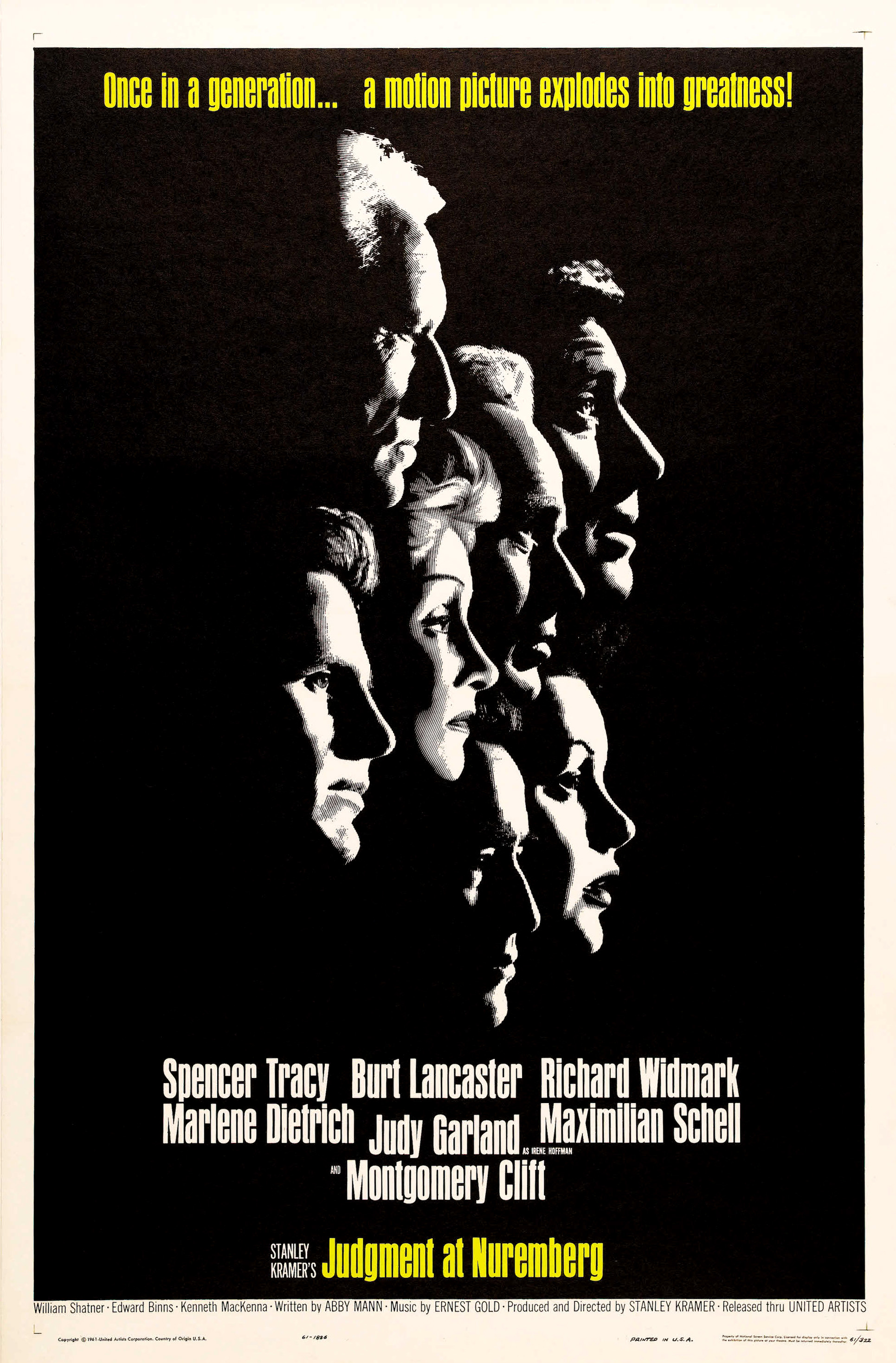
In 1961, Stanley Kramer directed Judgment at Nuremberg, a film that stands as a significant accomplishment in cinema history and a pivotal moment in Kramer's body of work. Known for tackling socially relevant themes, Kramer presents a hauntingly compelling exploration of one of the darkest chapters in human history: the trial of Nazi judges accountable for war crimes. This historical drama not only depicts the complexities of judicial accountability but also prompts audiences to engage with moral questions surrounding guilt, complicity, and the nature of justice in a post-war world. The film serves as a reflective mirror on societal ethics and individual responsibility during times of extreme duress.
Critical consensus on Judgment at Nuremberg reflects a deep appreciation for its masterful storytelling and engaging performances by a stellar cast, including Spencer Tracy, Burt Lancaster, and Judy Garland. Reviews describe the film as a complex and disturbing portrayal of historical justice, where the moral implications are intricately woven into the very fabric of the narrative. The courtroom scenes are particularly striking, as they meticulously highlight the tensions between legal principles and the horrific realities of the Holocaust. Audiences are drawn into this agonizing struggle for justice with a profound sense of historical responsibility, experiencing the palpable weight of collective guilt that looms over the characters.
One of the film's key strengths lies in its ability to educate viewers about the moral reckoning faced by post-war Germany. It intricately raises questions about historical memory and the legacy of Nazi atrocities, forcing audiences to confront not just the actions of individuals but the shared culpability of a society. This intricate interplay of history and morality evokes a visceral reaction, leaving viewers pondering the implications long after the credits roll. Judgment at Nuremberg thus serves not only as a period piece set in the aftermath of World War II but also as an ongoing discourse about the nature of justice and the human condition.
Beyond its historical context, Judgment at Nuremberg achieves a level of excellence that has allowed it to hold up against the passage of time. The film transcends its era through its universal themes, making it as relevant today as it was at its premiere. The haunting portrayal of judges wrestling with their past decisions speaks to contemporary issues of judicial conduct and moral responsibility across all nations and legal systems. In a world where moral complexities continue to persist, Kramer's film remains a significant cultural artifact, one that challenges us to consider the ramifications of our actions and the structures that allow injustice to flourish.