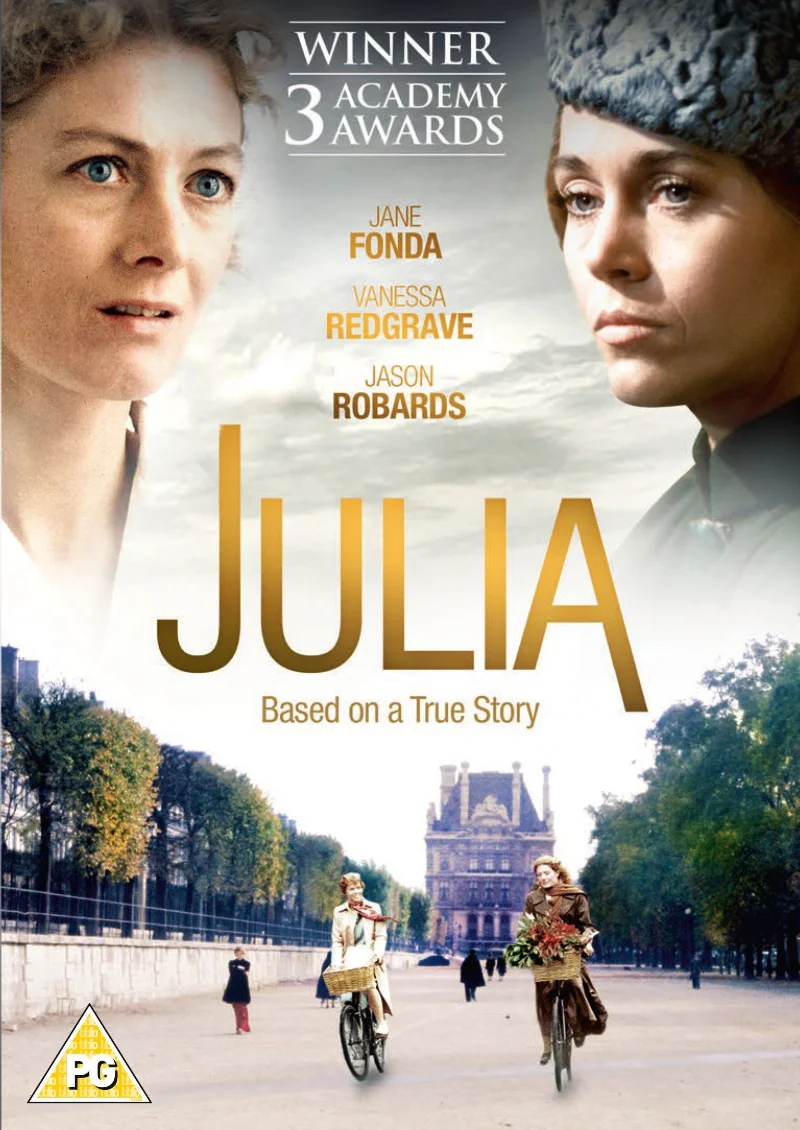
Fred Zinnemann's Julia (1977) occupies a distinct place in cinema history. Known for his ability to adapt literary works into compelling films, Zinnemann delivers a narrative that weaves together themes of memory and tribute, drawn from Lillian Hellman's memoir. The film stands out within his oeuvre, shining a light on the complexities of personal relationships set against the backdrop of political turmoil during the 1930s. This exploration of history through the lens of personal experience enhances the richness of Zinnemann's storytelling, alongside his consistent focus on deeply human narratives.
The film chronicles the bond between the protagonist, Lillian, played by Jane Fonda, and her enigmatic friend Julia, portrayed by Vanessa Redgrave. Critics have noted that the characters embody a disjointed quality; their complexities contribute to a tapestry of unresolved relationships that linger ambiguously throughout the film. Lillian's quest to recount her memories of Julia is marked by fragmented storytelling, leading to a narrative that feels unfocused at times. This structure resonates with viewers exploring themes of nostalgia and the challenge of conveying emotional truths through recollection and tribute.
Memory serves as both a guide and a hindrance in Julia, where Lillian seeks to piece together her past yet finds herself ensnared by its imperfections. The film's fragmented approach mirrors the intricacies of memory itself, how it is never entirely clear or linear, often jarring as it confronts the realities of loss and political activism. Critics have interpreted this lack of narrative cohesion as a parallel to the trauma experienced by those who lived through tumultuous times, yet it may leave some audiences seeking a more definitive resolution.
The unresolved relationships at the heart of Julia elevate the film beyond a simple account of friendship or activism. The chemistry between Lillian and Julia remains enigmatic, suggesting layers of intimacy yet unexplored. Their bond operates under the weight of external forces that forge indelible connections but also impose distance. Zinnemann carefully balances the tributes to Julia’s courage and Lillian’s nostalgic reflections, crafting a narrative that invites viewers to engage critically with both the characters and their historical context.
In conclusion, Julia is a testament to Fred Zinnemann's talent for weaving complex narratives that resist simplistic interpretations. While its structure might appear disjointed, the film's exploration of memory and tribute offers a rich field for analysis, providing insight into the ambiguous nature of human relationships. As audiences reflect on the film today, they encounter not only a personal story of friendship and remembrance but also a broader commentary on the intersection of lived experience and historical legacies.