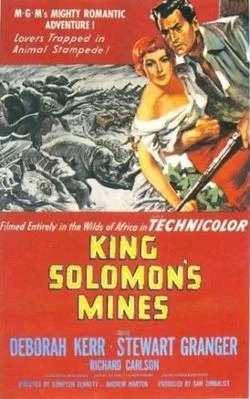
King Solomon's Mines (1950), directed by Compton Bennett and Andrew Marton, occupies a notable place in the pantheon of adventure cinema, representing a blend of lavish Technicolor presentation and the quintessential themes of colonial exploration and heroism. As an adaptation of H. Rider Haggard’s seminal novel, the film encapsulates the Eurocentric fascination with Africa, reflecting the cinematic conventions of its time while also marking a significant entry in the oeuvre of its directors. Bennett, known for his work in British cinema, and Marton, whose career spanned several geographical contexts, came together to create a visually stunning, albeit thematically complex, narrative that contributes to the broader discourse on adventure narratives in film history.
Critics have had mixed sentiments about the film, often veering from praise for its captivating visuals to criticism of its narrative shortcomings. With its lush African vistas rendered in Technicolor, King Solomon's Mines showcases the grandeur of the continent, yet it also invites scrutiny concerning its representation of colonialism and its stereotypical portrayal of African cultures. The heroic journey of the central characters, which typically embodies audacity and masculinity, is countered by the film’s adherence to clichés often seen in adventure tales of the era. This tension between the film's gripping moments and its dull, formulaic scenes has led to debates about its overall impact, whether it remains entertaining as a classic or falters as a relic of colonialist ideology.
The film’s narrative centers on exploration, danger, and the quest for mythical treasures, echoing the age-old allure of adventure storytelling. Protagonists are portrayed as heroic figures, embarking on a journey fraught with challenges and existential perils. However, this heroism is laced with an undercurrent of ambivalence, as their exploits often echo a colonial mentality that can feel patronizing by contemporary standards. While these themes of heroism and adventure might resonate, they risk alienating modern audiences who view them through a post-colonial lens, scrutinizing the implications of power dynamics and racial representations.
Despite its shortcomings, King Solomon's Mines remains influential, serving as a visual spectacle that has inspired subsequent adventure films. Its Technicolor palette not only enhances the film's allure but also solidifies its status as a quintessential classic. The film has mercifully evolved into a cultural touchstone, one that invites new interpretations and critiques as scholars continue to explore its impact in the context of both cinematic history and societal shifts in understanding colonial narratives.
In summary, King Solomon's Mines stands as a striking visual achievement within the adventure genre, while simultaneously revealing the complexities of heroism and colonialism embedded within its storytelling. The film's lavish production and captivating African landscapes contrast with a narrative that may feel tired or misguided by today's standards. Ultimately, while it promises a gripping adventure on screen, it also serves as a reminder of the cultural shifts and critical examinations that have emerged in the decades since its release.