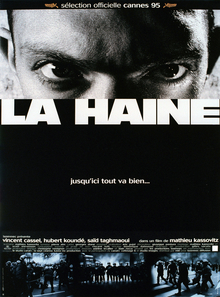
La haine (1995), directed by Mathieu Kassovitz, stands as a seminal work in French cinema, capturing the complex interplay of social unrest and youth alienation in urban settings. Coming at a time when France was grappling with the ramifications of a multicultural society, Kassovitz crafted a film that not only reflects the harsh realities of life in the banlieues but also serves as an urgent political commentary on systemic issues such as police brutality, social inequality, and racial tension. This film marks a pivotal moment in Kassovitz’s career, as he deftly combines personal storytelling with broader societal critiques, establishing himself as a voice for disenchanted youth caught in a web of urban decay and disillusionment.
Critical consensus around La haine highlights its raw and visceral authenticity, which resonates deeply with audiences. The film follows three young men, Vinz, Saïd, and Hubert, as they navigate a post-riot Parisian landscape marked by hostility and despair. This narrative structure allows for an exploration of friendship amidst the chaos of urban violence, with each character representing different facets of youth culture and their reactions to the disenfranchisement they face. The film’s urgent pacing and powerful imagery leave a lasting impact, drawing viewers into the emotional and psychological turmoil experienced by these young men as they grapple with their cultural identities and the stark realities of their environment.
One of the film’s most compelling themes is its critique of police brutality, which is depicted in a visceral manner that refuses to shy away from uncomfortable truths. The interactions between the protagonists and law enforcement encapsulate the distrust and fear that permeate communities facing systemic oppression. Kassovitz does not present simplistic villains or heroes, opting instead for a nuanced portrayal that challenges viewers to reflect on the societal constructs contributing to this cycle of violence. The film's relevance remains palpable today, as it mirrors ongoing conversations about police conduct and social justice, making it a timeless piece of cinema that echoes contemporary issues.
Kassovitz's use of black-and-white cinematography further amplifies the film’s themes, stripping away distractions and honing in on the stark contrasts of life in the banlieues. This stylistic choice enhances the emotional weight of the story, with every frame serving as an unsparing reflection of urban decay and social division. The aesthetic contributes to the film's rawness, compelling viewers to confront the authenticity of the experiences depicted on screen, rather than allowing them to remain distant spectators.
Finally, La haine is distinguished not only by its thematic depth but also by its emotional resonance. The portrayal of friendship among the three protagonists serves as a poignant reminder of solidarity amid adversity. As they navigate their challenges together, the film underscores the importance of human connection in overcoming bleak circumstances. Through powerful storytelling and an unflinching look at societal flaws, Kassovitz’s La haine remains a pivotal work that continues to provoke thought and discussion about the complexities of urban life, youth disillusionment, and the enduring struggle for social justice.