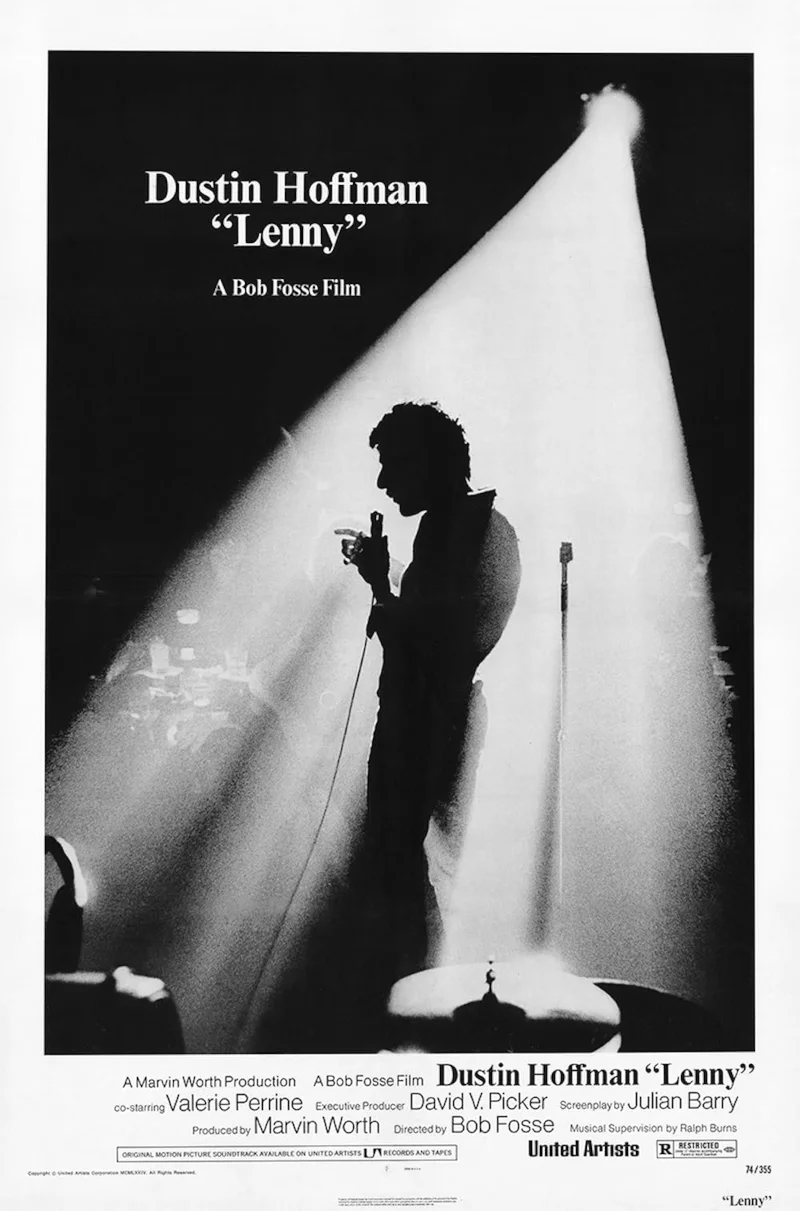
Lenny, directed by Bob Fosse in 1974, stands as a compelling and powerful piece within both the canon of American cinema and Fosse's own filmmaking legacy. Renowned for his unique vision and innovative choreography, Fosse brings a gritty realism to this biographical drama about the controversial comedian Lenny Bruce. This film not only chronicles Bruce's tumultuous life but also delves deeply into themes of freedom of speech and the tragic consequences faced by those who dare to challenge societal norms. In a time when censorship loomed large over the arts, Lenny offered a raw and unfiltered look at the life of a performer who pushed boundaries, making it not only a vital historical document but also a poignant artistic statement.
Critics have hailed Lenny for its intense and nuanced portrayal of Bruce’s life, recognizing it as a standout example of biographical storytelling. Despite its tragic elements, the film marries comedy with heartbreak, weaving together moments of laughter with the stark realities of Bruce’s struggles against an unyielding social order. Fosse's direction captures the essence of Bruce's unrelenting spirit, juxtaposing his comedic genius with the heavy toll of his battles against censorship and his personal demons. The film offers a gritty authenticity that resonates with audiences, prompting discussions about the boundaries of artistic expression and the price of freedom in a repressive society.
The film’s combination of tragedy and controversy is not only effective in its narrative but also serves as a reflection of the broader cultural climate of the 1970s. As Bruce navigated his career, he faced significant backlash for his crude humor and unapologetic critiques of authority, a sentiment that feels very much alive in today’s discussions about comedy and its societal impact. Lenny thus acts as a powerful reminder of the perennial tension between artistic expression and societal acceptance, illustrating how the act of performance can serve as both a weapon and a shield.
In Fosse’s hands, the biopic turns into an intensely personal journey that traverses the peaks of comic genius alongside the valleys of despair, making it a fresh and compelling narrative experience. The film captures the essence of Bruce’s life, a life marked by highs and lows, laughter and sorrow, censorship and tumultuous freedom. Its gritty portrayal, coupled with a powerful performance by Dustin Hoffman, solidifies Lenny as an authentic examination of a revolutionary figure who was celebrated and vilified in equal measure. As such, the film endures as an essential piece of cinema that continues to provoke discussions about the limits of humor and the ongoing fight for freedom of speech.