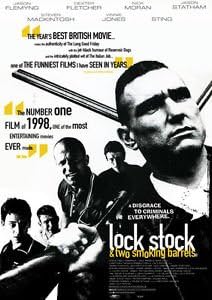
Guy Ritchie's Lock, Stock and Two Smoking Barrels stands as a defining entry in British cinema, particularly within the gangster genre that proliferated in the late 1990s. Released in 1998, the film reflects a wave of British crime films that drew on both the gritty realism of earlier works and the stylistic exuberance inspired by American filmmakers like Quentin Tarantino. Ritchie's debut feature artfully blends dark humor and intricate plots, establishing a distinctive voice that resonates through modern independent cinema. The film showcases a fresh roster of young actors, such as Jason Statham and Dexter Fletcher, whose performances contribute significantly to the film's vibrant and chaotic atmosphere.
At its core, Lock, Stock and Two Smoking Barrels encapsulates a complex narrative woven with themes of friendship and betrayal amidst the backdrop of a ludicrously high-stakes card game that spirals out of control. Ritchie employs a hyperactive style peppered with playful dialogue and dark comedic moments, allowing the audience to engage with both the absurdity and brutality of the characters' predicaments. This interplay of the wacky and the deeply serious reveals an altered perception of morality, where the line between right and wrong is continuously blurred. The film's plot complexity keeps viewers engaged, showcasing Ritchie's talent for crafting interconnected stories that culminate in an unexpected yet satisfying conclusion.
The film's tone is decidedly amoral and full of fun, a decision that has led to diverse interpretations and discussions focusing on its ethical implications. As the characters navigate a labyrinthine world filled with dangerous fund-raising schemes, Ritchie cleverly subverts traditional crime narratives, opting instead for a depiction of reckless camaraderie among the protagonists. This sense of brotherhood, tinged with dark humor, highlights a uniquely British sensibility that permeates the film, resonating with those familiar with the cultural nuances of the UK.
The influence of Ritchie on the British crime film landscape is undeniably significant, ushering in a new era of filmmaking characterized by a blend of rapid editing, music-driven sequences, and playful yet profound storytelling. Lock, Stock and Two Smoking Barrels serves as both homage and a reinterpretation of the gangster film genre, skillfully infusing intellectual humor reminiscent of the Marx Brothers while maintaining an edgy undercurrent of violence and danger. Such a dynamic contrast enriches the viewing experience, making the film not only entertaining but also undeniably thought-provoking.
In conclusion, Lock, Stock and Two Smoking Barrels stands out for its innovative and imaginative approach to storytelling, merging elements of comedy, crime, and friendship into a unique cinematic experience. Its successful reception and critical acclaim reflect a broader fascination with the complexities and moral ambiguities inherent in the genre. Ritchie's work has paved the way for subsequent filmmakers, marking a pivotal moment in the evolution of British cinema, a film that invites viewers to laugh, cringe, and think all at once.