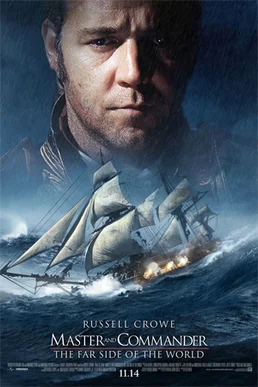
Peter Weir's Master and Commander: The Far Side of the World is a remarkable entry in the canon of sea adventure films, marking a notable moment in early 21st-century cinema. As a director known for his ability to weave intricate narratives with deep emotional resonance, Weir crafts a film that not only entertains but also evokes a sense of authenticity and respect for the maritime life of the early 1800s. With a meticulous attention to historical detail and a belief in the power of an ensemble cast, this film stands as a testament to both cinematic craftsmanship and the enduring allure of seafaring stories, echoing themes prevalent in Weir's diverse oeuvre.
The critical reception of Master and Commander: The Far Side of the World has often highlighted its exhilarating depiction of life aboard a British warship during the Napoleonic Wars. Critics admire the film’s balancing act of friendship, leadership, and the harsh realities of naval warfare, presenting a world that is both romanticized and grounded in realism. The authenticity of the period detail is embraced, enhancing the viewers’ immersion in a time where the ocean served as both a treacherous adversary and a backdrop for epic adventure. The film provides not just entertainment but also a lens through which to explore the complexities of loyalty, camaraderie, and the burdens of command.
Central to the narrative is the dynamic relationship between Captain Jack Aubrey, played with a robust physicality by Russell Crowe, and his close friend, the ship's doctor, Stephen Maturin, portrayed by Paul Bettany. Their bond, characterized by mutual respect and intellectual engagement, serves as the emotional pulse of the film, illustrating the importance of friendship amidst the chaos of naval battles and the unforgiving sea. The film is at once broad-shouldered and fleet-footed, balancing intense action sequences with quiet moments of reflection, making it a rich tapestry that showcases the multifaceted nature of leadership.
Master and Commander also distinguishes itself through the sheer scale and spectacle of its production. This mega-production offers a visually stunning experience, where the roar of the ocean and the splendor of the ships are captured with a vibrant authenticity. Both exhilarating and infectiously enjoyable, the film thrives on the tension created by its seafaring epic nature; it confronts the audience with the physical demands and unforeseen challenges that accompany life at sea. Weir's direction imbues each frame with a sense of purpose and urgency, rendering even the quieter scenes imbued with an undercurrent of intensity.
Even in its moments of action, the film retains an old-fashioned charm that speaks to a bygone era of storytelling. It appeals to a sense of adventure that many may find nostalgic, yet also resonates with contemporary viewers through its exploration of human emotion and aspiration. The seamless blend of grand battles, personal struggles, and philosophical discourse about the nature of war and friendship ensures that Master and Commander transcends typical genre constraints, establishing itself as a timeless classic in both the adventure genre and Weir’s distinguished filmography. Its legacy endures, offering a vivid portrayal of the trials and triumphs sailing the unpredictable seas, reminding audiences of the essential values of companionship and resolve in the face of adversity.