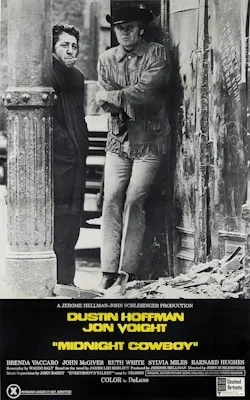
Midnight Cowboy, directed by John Schlesinger and released in 1969, stands as a seminal piece in the landscape of American cinema, marking a pivotal moment in the evolution of film during the counterculture era. This gritty exploration of the urban underbelly was audacious for its time, addressing taboo subjects with an authenticity and rawness that shocked mainstream audiences. Schlesinger, already known for his fearless narratives, pushed boundaries in Midnight Cowboy, emerging as a defining voice in the New Hollywood movement, one that embraced risk-taking and embraced stories often relegated to the margins of society.
Critical consensus around Midnight Cowboy illuminates its profound themes of loneliness, failed dreams, and the stark realities of urban existence. The film chronicles the unlikely bond between Joe Buck, a naïve Texan seeking fortune as a hustler in New York City, and Ratso Rizzo, a sickly and resourceful con man. Their friendship offers a glimmer of humanity amidst the pervasive isolation and despair of city life, reflecting the struggles of individuals caught in the throes of societal indifference. This relationship, heartbreaking yet poignant, anchors the film, illustrating how connection can often emerge in the bleakest circumstances.
Schlesinger's work thus captures an era of cultural shift, documenting the disillusionment of the American Dream and the bustling yet hollow nature of urban life. The film's vulgarity and unflinching gaze at sex and survival reveal the gritty realities faced by those who linger on the fringes of society. The cinematic boldness with which Schlesinger approached the narrative, from the inventive editing techniques to its haunting score by John Barry, adds layers to the portrayal of New York's desolation, inviting viewers to confront the uncomfortable truths of their own realities.
Ultimately, Midnight Cowboy resonates as an incredible testament to the human experience, offering an evocative lens on friendship and isolation. The film's enduring legacy lies in its heartfelt depiction of two flawed characters navigating a world rife with challenges, providing a mirror reflecting both personal and collective despair. With its unguarded portrayal of human vulnerability, Midnight Cowboy remains not just a film about survival, but a profound exploration of what it means to seek connection in a fragmented, often unforgiving world.