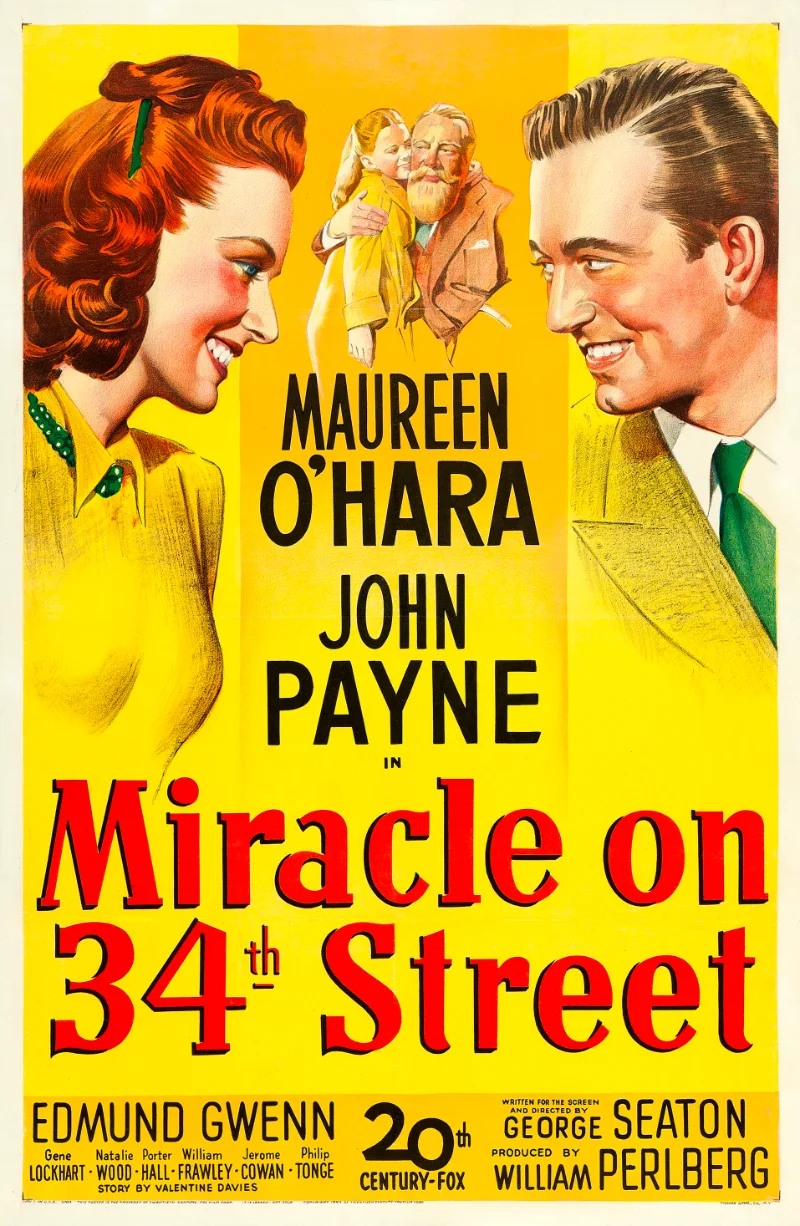
Miracle on 34th Street, released in 1947 and directed by George Seaton, stands as a touchstone of American cinema, deeply embedded in the fabric of holiday traditions. Seaton, known for his ability to create uplifting narratives, crafts a film that resonates through generations with its exploration of belief, love, and the holiday spirit. This film captures the heartfelt essence of Christmas, embodying the sentimentality and charm that defines it as a classic. In a post-war America yearning for hope and togetherness, Miracle on 34th Street provided a much-needed reprieve, merging fantasy with the enduring power of faith in something greater than oneself.
At the core of Miracle on 34th Street is the theme of belief, specifically, belief in Santa Claus. The narrative revolves around Kris Kringle, a kindly old man who claims to be the real Santa, and the skepticism that surrounds him from both the adults and the children he encounters. This central conflict serves as a powerful commentary on faith and the often harsh realities of the adult world. Critics have lauded the film for its ability to portray the innocence of childhood belief while simultaneously addressing the societal pressures that undermine that innocence. Seaton’s direction, paired with a compelling performance from Edmund Gwenn as Kris, invites audiences to embrace the magic of the season.
The heartwarming and charming qualities of Miracle on 34th Street have made it a perennial favorite, showcasing family values that resonate clearly across eras. The way the story emphasizes the importance of family and togetherness during the holiday season reinforces a universal message: that love and connection are fundamental to the human experience. The narrative weaves relationships, between parents and children, and even fleeting encounters with strangers, into a tapestry that champions these values, urging viewers to reflect on their own lives and relationships during this personal and social time of year.
Critical consensus recognizes Miracle on 34th Street not just as a festive film, but as a significant cultural artifact that challenges viewers to maintain their belief in the extraordinary. Even as adults become entrenched in skepticism, the film tenderly encourages the idea that magic can exist if only one chooses to believe. Its sentimental charm is evident from its optimistic conclusion, leaving audiences with the hope that a little faith can indeed work miracles. Together, these elements create a cinematic experience that transcends mere entertainment, positioning the film as a necessary reminder of the warmth that can arise from belief in the holiday spirit.