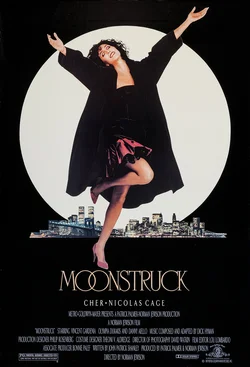
In the landscape of American cinema, Moonstruck (1987) stands as a quintessential romantic comedy that exquisitely captures the nuances of Italian-American culture, weaving its themes of love and family into a rich tapestry. Directed by Norman Jewison, this film reflects the director's adeptness at blending humor with deep emotional resonance, echoing his earlier successes while establishing a unique space for itself in the genre. Set against the backdrop of New York City, Moonstruck portrays a world where the complexities of family dynamics and the rediscovery of love unfold in enchanting, yet entirely plausible ways, making it not just a film, but a nourishing cinematic experience.
Critics have widely praised Moonstruck for its bittersweet narrative, which explores romantic yearning alongside the intricate relationships that define the family unit. Central to the film is Loretta Castorini, played by Cher in an Academy Award-winning performance, who finds herself navigating the complexities of love after a chance encounter. The film encapsulates the notion that love can be both exhilarating and confounding, illustrating how familial obligations and cultural expectations converge to shape our romantic choices. The charm of Moonstruck lies in its gentle humor and relatable characters, making even the most bizarre situations feel grounded and accessible.
The enchanting nature of Moonstruck often feels reminiscent of foreign-film sensibilities, showcasing the cultural underpinnings and familial rituals that are integral to Italian-American life. The film's portrayal of family gatherings, storytelling, and communal dining immerses viewers in a world where relationships are celebrated, and love is seen as a force capable of transforming lives. This cultural authenticity resonates throughout the film, as the characters grapple with their desires and aspirations in both romantic and familial arenas, ultimately finding reconciliation within themselves and with one another.
What emerges from Moonstruck is a tapestry woven from the threads of love, longing, and the complexities of family relationships. The film invites its audience to reflect on their own experiences of love, whether it be the rediscovery of a long-lost passion or the enduring bonds of family that shape our lives. In a world often fraught with disconnection, Moonstruck serves as a reminder of the nourishment found in authentic connections, leaving viewers both satisfied and enriched by its exploration of the human heart. By marrying humor with poignant realism, Jewison crafts a narrative that remains timeless, resonating with audiences across generations.