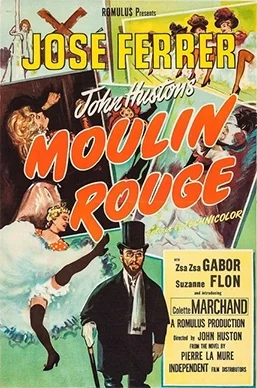
In the realm of cinematic history, Moulin Rouge, directed by John Huston in 1952, occupies a unique position that strays from the conventional triumphs of the musical genre. While Huston is often celebrated for his grittier, more narrative-driven works such as The Maltese Falcon and The Treasure of the Sierra Madre, Moulin Rouge stands out as an opulent homage to the artistic struggles of the bohemian lifestyle within the vibrant backdrop of Parisian nightlife. This film not only captures the vibrant essence of early 20th-century artistry but also delves into the complexities of tragic love, showcasing a life fraught with both passion and despair.
Critics have largely noted the film's lavish and colorful presentation, which serves as a canvas for the exploration of romanticism that permeates throughout its narrative. The magnificence of the set designs, costuming, and dance sequences collectively elevate the portrayal of the thriving yet tumultuous artistic community surrounding the iconic cabaret. At its core, Moulin Rouge presents a gripping tale of artists navigating their ambitions and heartaches, with the city of Paris acting as a vital character in its own right, so integral to the story of inspiration and suffering.
The film's exploration of the bohemian lifestyle is juxtaposed with the romantic struggles of its characters, highlighting the deep emotional currents that run beneath the surface of colorful exuberance. The lead character, Toulouse-Lautrec, offers a lens through which viewers witness the juxtaposition of the flamboyant nightlife and the deeply personal battles of the artist. Critics have cited this duality as one of the film's most compelling aspects, drawing viewers into a world where beauty coexists with sorrow, and joy is often overshadowed by tragedy. This tension is masterfully encapsulated in the film's dance and musical sequences, which oscillate between exhilarating peaks and moments of profound melancholy.
Moreover, Huston’s ambitious ambition for Moulin Rouge is reflected in its experimental narrative style, creating sequences that feel both authentic and artificial. The vibrant and operatic musical numbers, while celebratory, also serve as a stark reminder of the artifice of performance. This theme of illusion and disillusionment resonates throughout the film, with each character confronting their own tragic love stories, and ultimately, their failures. Critics have noted that while the film is glorious in its visual splendor, it equally serves as a meditation on the darker sides of the artistic process, making it a worthwhile, if occasionally depressing, cinematic experience.
In essence, Moulin Rouge is a rich tapestry of vibrant imagery and heartfelt storytelling, a cinematic exploration of the complexities of love and creativity. Huston's portrayal of this iconic Parisian venue transcends mere musical theater, rendering a story that is at once exhilarating and sobering, a reflection not only of individual artistic struggle but also of the zeitgeist of a bygone era. As such, it holds an enduring place in the canon of classic cinema, inviting audiences to reflect on the delicate interplay between art, romance, and the often harsh realities of the human condition.