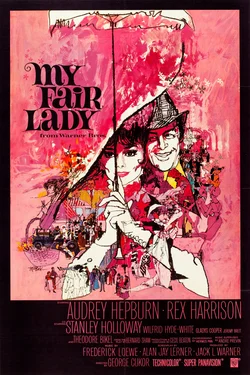
Directed by George Cukor, My Fair Lady (1964) occupies a pivotal role in the landscape of classic cinema. Cukor, renowned for his ability to blend wit and style, elevates this adaptation of George Bernard Shaw's play Pygmalion, marrying the themes of transformation and social mobility with a vibrant and enthralling musical soundtrack. The film, celebrated for its stellar performances, particularly Audrey Hepburn's portrayal of Eliza Doolittle, presents a nuanced exploration of class disparity, positioning itself as both a romantic comedy and a philosophical commentary on identity and self-discovery. In the cinematic history of the early 1960s, My Fair Lady represents both a continuation of Broadway's influence on film and a testament to the era's affinity for grand, lavish storytelling.
Critical consensus celebrates My Fair Lady as a timeless piece that delves into the intricacies of language and class. The film chronicles Eliza Doolittle's transformation from a flower girl with a thick Cockney accent to a refined lady, reflecting deep-seated societal norms that dictate worth based on appearance and speech. Through clever, humorous encounters with the phonetics professor Henry Higgins, the film crafts a compelling narrative about personal growth and the fine line between empowerment and manipulation. The duality of romance, as both a means of awakening and a complex social contract, adds layers to Eliza's journey, leaving audiences pondering the price of transformation.
Moreover, the film's stylistic elements contribute significantly to its enduring charm. Cukor's direction exudes a literate sophistication, blending comedy with moments of profound introspection. The cinematography and art direction create a visually splendid experience, illustrating not just the transformation of its characters but also their emotional landscapes. Each song, resonating with charm and humor, reflects Eliza's evolution while also engaging the audience with its exuberance and wit. In this sense, My Fair Lady serves not only as an entertainment piece but as a reflection on the human condition, subtly questioning societal values while maintaining a delightful, captivating presence.
The film's legacy has also been shaped by its accessibility and restoration efforts, ensuring that it continues to resonate with new generations. The meticulous preservation of this cinematic treasure speaks to its importance as a cultural artifact in discussions of class and identity, as well as its role in the musical genre. In its restoration, My Fair Lady has experienced a rejuvenation that highlights its impressive production values and the magnificence of its performances. This revitalization reinforces the notion that classic cinema not only holds historical significance but can also be relevant to contemporary audiences, inviting fresh interpretations and discussions.
In conclusion, My Fair Lady stands as a definitive classic, intricately designed to entertain while prompting deeper contemplation. Cukor's embrace of romance, transformation, and linguistic exploration positions the film among the most beloved narratives of its time. Its humorous yet philosophical approach lends a timeless quality, affirming that the quest for self-discovery and acceptance transcends the boundaries of class and circumstance. As audiences continue to be captivated by its enchanting melodies and sharp dialogue, My Fair Lady remains an everlasting emblem of cinematic artistry, reflecting both the beauty and the complexities of the human experience.