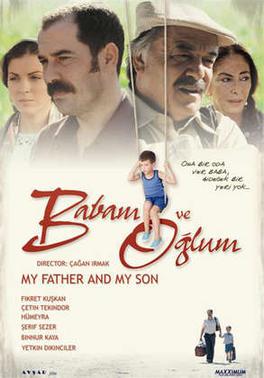
In the realm of Turkish cinema, Çağan Irmak has established himself as a poignant storyteller, adept at exploring deeply human experiences. His 2005 film My Father and My Son is a compelling examination of familial bonds, particularly the fraught yet tender relationship between fathers and sons. Through the lens of a rural Turkish landscape, Irmak paints a narrative that resonates with both the personal and universal struggles of family dynamics, religious devotion, and the quest for independence. This film marks a significant entry in Irmak's oeuvre, showcasing his unique ability to blend emotional depth with evocative cinematography.
Critics have praised My Father and My Son for its exploration of the father-son relationship, portraying it as both intensely loving and fiercely oppressive. The film's protagonist, Sadik, struggles between the weight of his family's expectations and his desire for personal freedom, a theme that reverberates through various layers of the narrative. Irmak addresses the complexities of parental authority and the generational divide, illustrating how dreams can be both a source of liberation and an oppressive burden. This intricate interplay between family dynamics and personal ambitions invites viewers to reflect on their own interactions within familial structures, making the film exceptionally relatable.
The critically lauded performances in My Father and My Son breathe life into these themes, with cast members delivering beautifully acted portrayals that range from somber to sweetly comedic. Irmak’s direction balances the heavy emotional beats with lighter moments, allowing for a comedic-drama that never feels overly sentimental or dramatically inert. Such a blend of tones reflects the intricate tapestry of human relationships, emphasizing that joy and sorrow often exist side by side, particularly in family contexts.
Visually, My Father and My Son stands out for its gorgeously shot landscapes, evoking a sense of place that is both austere and majestic. The cinematography serves not just as a backdrop but as a character in its own right, encapsulating the emotional landscape of the narrative. Irmak’s cinematic style is marked by an elegiac quality, as each frame captures the weight of history and memory, reinforcing the themes of longing and unresolved tension that are central to the film's message.
The film has not escaped critique, with some viewing its pacing as too leisurely, a notion that may render parts of the film underdeveloped. However, this contemplative approach aligns with the film's themes of introspection and emotional complexity, encouraging viewers to engage deeply with the characters' journeys. Ultimately, My Father and My Son stands as a brave exploration of family relationships, intertwining hope and despair in a narrative that invites catharsis through its profound examination of love, duty, and the passage of time. As such, it remains a significant work within modern Turkish cinema and a testament to Irmak’s artistry.