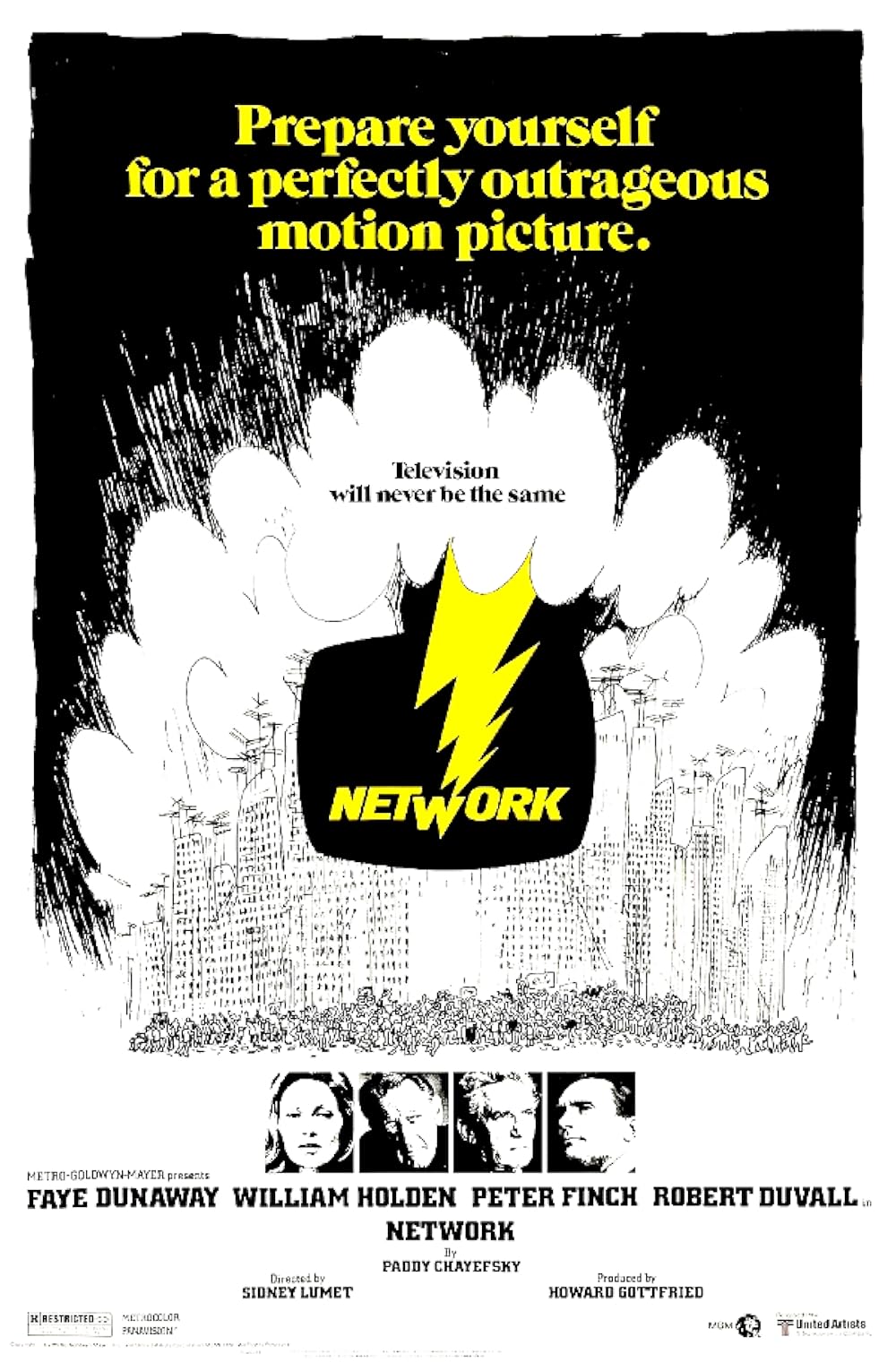
Network, directed by Sidney Arthur Lumet in 1976, stands as a paramount example of 1970s American cinema, revealing the darker intricacies of the television industry and its insatiable quest for ratings. This scathing satire captures the zeitgeist of a nation grappling with disillusionment, as no other era so vividly reflected on the moral decay within corporate America. Lumet, known for his focus on character-driven narratives and socially relevant themes, delivers a film that remains as resonant today as it was upon release, showcasing not only his directorial prowess but also his ability to navigate the treacherous waters of media manipulation and corporate greed.
The narrative follows Howard Beale, portrayed by Peter Finch in a powerhouse performance that earned him an Academy Award posthumously. Beale's descent into madness serves as a stark commentary on the sensationalism of the news-as-entertainment model that was emerging during the 1970s. His infamous prophetic declaration of being "mad as hell" encapsulates the mounting frustrations of the American public, illuminating the deep-seated discontent with traditional media channels. Lumet’s sharp precision in storytelling highlights not just Beale’s personal struggles but also a broader critique of a society increasingly obsessed with ratings and the commodification of news.
Critical consensus identifies Network as a brave work of cinema that brilliantly caricatures the excesses of television executives and their callous disregard for journalistic integrity. With its punishing irreverence and cool intelligence, the film dissects the anatomy of media manipulation, illustrating the power dynamics at play within the television industry. The script, written by Paddy Chayefsky, is infused with sharp wit and biting humor, making the film not only intelligent and thoughtful but also uproariously entertaining. The vivid caricatures of the characters—such as the ruthless television producer Diana Christensen—are emblematic of an industry willing to sacrifice ethics for profit.
As a testament to its enduring relevance, Network has been acclaimed as an intelligent satire that remains remarkably prescient in addressing contemporary issues surrounding corporate greed and the ethical quandaries of media today. The film's ability to engage with such significant themes through well-acted performances and rich dialogue speaks to Lumet’s mastery as a filmmaker. The interplay of personal relationships set against the backdrop of a ratings-obsessed culture reveals the hollowness of human connection within a world driven by the need for entertainment.
In conclusion, Network is not merely a film about the television industry, but rather a powerful commentary on the societal structures that govern media today. Its savage vision and enduring themes resonate deeply with audiences, prompting reflection on the implications of media consumption in a rapidly changing world. As we navigate an era inundated with information overload and sensationalism, Lumet’s film remains a crucial reminder of the price of corporate avarice and the consequences of abandoning integrity in pursuit of viewer engagement.