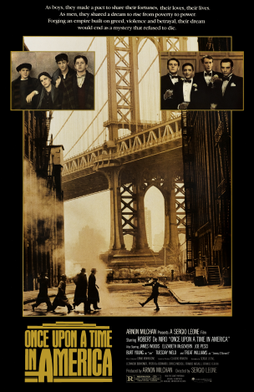
Sergio Leone's Once Upon a Time in America stands as a monumental entry in the gangster genre, offering a complex tapestry of themes such as loyalty, betrayal, and the inexorable passage of time. Released in 1984, it was a departure from Leone's previous works, marked by an ambitious narrative structure that spans several decades and chronicles the tribulations of childhood friends turned mobsters in New York City. This film not only reflects the director's masterful storytelling but also serves as a significant commentary on the American Dream, exploring the fragility of memory and the way it shapes one's identity against the backdrop of violence and crime.
Critics have long recognized Once Upon a Time in America as an epic narrative that navigates the intricacies of gangster life while simultaneously delving deep into human emotions, such as love, loss, and regret. The film's tragic elements are woven seamlessly into its expansive storytelling, allowing audiences to witness the inevitability of betrayal and the enduring connections of loyalty that often bind individuals to their past. Through Leone's lens, the characters are not merely criminals; they are profoundly human, struggling to reconcile their aspirations with the harsh realities that dictate their choices.
The cinematography and score in Once Upon a Time in America are nothing short of breathtaking, effectively reinforcing the film's somber tone as it oscillates between the exuberance of youth and the melancholy of aged reflections. As time unravels the narratives of its protagonists, the film employs non-linear storytelling that invites viewers to grapple with the significance of memory, and how it can distort the truth of experiences. This impressionistic approach to storytelling is a hallmark of Leone's style, echoing themes apparent in his earlier western epics, yet infused with an urban sensibility that marks a significant evolution in his craft.
Despite its initial mixed reception, the film has since been lauded as a masterpiece, particularly after its restoration that allowed audiences to appreciate Leone's vision in its full glory. Critics highlight its epic scale and violent realism, noting that the director's meticulous attention to detail breathes life into a narrative that is as engrossing as it is tragic. This complex film invites viewers to ponder their own perspectives on memory and the passage of time, as it celebrates the heights of friendship and the depths of sorrow that define the human experience. Ultimately, Once Upon a Time in America remains a seminal work in understanding the gangster genre, while also standing as a testament to Leone's legacy as one of cinema's greatest storytellers.