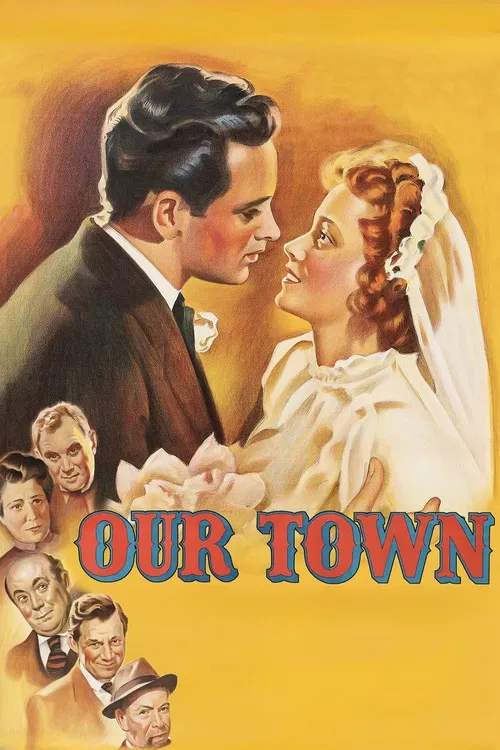
Directed by Sam Wood, Our Town (1940) stands as a poignant representation of small-town American life, drawing from the timeless Thornton Wilder play from which it is adapted. Wood, known for his ability to depict relatable human experiences on screen, presents a motion picture that captures the essence of nostalgia and the profound connections between individuals. While Wood's career spans various genres, from comedies to musicals, Our Town offers a unique lens, focusing intently on the simplicity and complexity of everyday life in a close-knit community. This film is both a reflection of its time and a notable point in cinema history, highlighting the transition from stage to screen adaptation with a particular emphasis on sentimentality and human understanding.
Critical consensus around Our Town recognizes its amiable nature, despite some noting the expurgation of more profound themes found in Wilder's original play. The film embraces a gentle nostalgia, portraying the seemingly mundane moments of life that, when examined closely, reveal deeper truths about human connection. The town of Grover's Corners serves as a microcosm of American life, encapsulating the joys and sorrows of its residents, providing the audience with a mirror to their own experiences of love, loss, and community. However, terms like "pleasant" and "mediocre" also surface in reviews, pointing to a mixed reception that acknowledges the film's charm while also critiquing its execution.
As an Oscar nominee, Our Town is significant not only for its nostalgic themes but also for its artistic approach to storytelling. While some critics argue that the film's adaptation sacrifices some of Wilder's original poignancy, its value lies in capturing the warmth and innocence of small-town interactions. The cinematography and performances work in tandem to create a pleasant atmosphere, one that transports the viewer to a simpler time, embodying the ideals of American life that are often romanticized in literature and theater.
Ultimately, Our Town invites viewers to reflect on the universal aspects of human experience, the enduring connections we forge and the passing of time. Through its portrayal of small-town life and the intricate relationships that define it, the film elicits a sense of nostalgia that resonates with both contemporary audiences and those familiar with the era it represents. While the film may not achieve the lofty heights of its source material, it still serves as a valuable exploration of humanity’s shared journey, celebrating the beauty found within the ordinary.