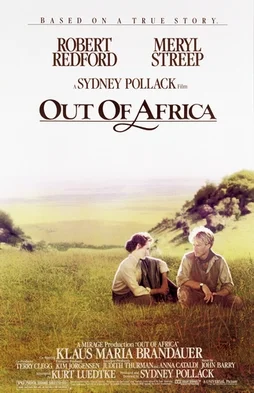
Sydney Pollack’s Out of Africa (1985) stands as an ambitious testament to storytelling that intertwines personal longing and socio-political legacies. Set against the sweeping vistas of colonial Kenya, the film encapsulates the life of Danish author Karen Blixen, who navigates the complexities of love, loss, and identity amidst the backdrop of a rapidly changing world. Pollack, whose career also includes noteworthy works like Tootsie and The Way We Were, masterfully balances the epic elements of the narrative with intimate human experiences, yet the movie has drawn its share of criticism for perceived missteps in tone and depth.
Critics have grappled with the film's grand narrative, often describing it as both impeccably lush and overblown. While the cinematography captures the rugged beauty of Africa, many reviews highlight a disconnect between the film's romanticized portrayal of colonial life and the harsh realities of its historical context. The exploration of colonialism in Out of Africa, while poignant, is sometimes perceived as distant and unconvincing, lacking the necessary depth to address the nuanced identities of the Kenyan people overshadowed by the film's Western gaze. It teeters on the edge of romanticism, making it easy for audiences to become enamored with its aesthetic while ignoring underlying complexities.
At its core, Out of Africa delves into themes of love and loss, portraying Blixen's tumultuous relationship with big-game hunter Denys Finch Hatton. This relationship highlights the conflict between civilization and untamed nature, a duality reflected in the characters' lives and the continent itself. Their passionate affair is painted with strokes of both beauty and tragedy, but its execution often flirts with melodrama, some would argue it veers into the realm of the "drippy" or "turgid." As the film unfolds, the juxtaposition of personal desires against historical realities becomes increasingly poignant, prompting debates about the lasting impact of colonial perspectives on modern narratives.
Furthermore, the film's representation of identity emerges as a central motif, with Blixen's journey reflecting broader questions about belonging and displacement. The characters are often portrayed as searching for their place in a world that appears both dreamlike and uncaring. While Meryl Streep's performance has been lauded for its emotional depth, others have criticized the casting choices that ultimately weakened the film's authenticity, underlining a sense of miscasting that detracts from the narrative's potential.
Ultimately, Out of Africa succeeds in evoking a sense of wonder and longing, rooted in Pollack’s intelligent directorial approach. Yet, it faces scrutiny for its failure to engage fully with the historical narratives it implies, leaving audiences in a complex moral landscape where beauty often obscures realism. As an epic exploration straddling the line between romance and colonialism, the film invites us to reflect on how history shapes our identities, while also reminding us of the emotive power of human connections against the vast tapestry of nature and civilization.