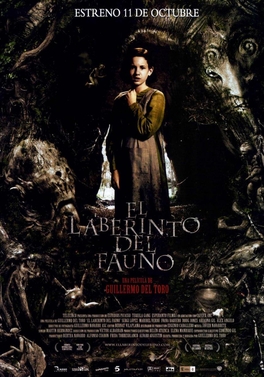
In the ever-evolving landscape of contemporary cinema, Pan's Labyrinth stands apart as a seminal work from director Guillermo del Toro, marking a pivotal moment in the revival of Spanish-language fantasy film. Released in 2006, this dark fairy tale intertwines the visceral realities of post-Civil War Spain with surreal elements of magical realism, showcasing del Toro's unique ability to meld the grotesque and the beautiful. As a companion piece to his earlier works, Pan's Labyrinth hints at the socio-political undercurrents that permeate del Toro's filmography, demonstrating how personal narratives can reflect broader historical traumas.
Critically, Pan's Labyrinth has been lauded for its rich visual storytelling and potent themes that resonate with audiences on multiple levels. The film artfully juxtaposes the innocence of childhood with the harshness of reality, creating a poignant exploration of how imagination serves as a refuge amidst the horrors of war and fascism. Del Toro’s characters navigate between these disparate realms, where the line between fantasy and reality becomes increasingly blurred. Through the lens of a child's eyes, the film challenges viewers to reconsider notions of danger and wonder, expressing a deeply humanistic vision that transcends age.
The film's aesthetic sensibilities have garnered praise for their richness and inventiveness. Del Toro crafts a spellbinding narrative that blends elements of surrealism and dark fantasy, creating a dreamscape that is both enchanting and terrifying. Visually lavish, Pan's Labyrinth explodes with color and creation, transforming the screen into a twisted fairy tale where the beautiful is haunted by the horrific. This tension is emblematic of del Toro's ability to evoke sensualist shocks that compel and challenge audiences, making the film a lasting masterpiece regarded as one of the greatest works in modern cinema.
While distinctly a fantasy narrative, Pan's Labyrinth does not shy away from its political dimensions, bravely confronting historical injustices and presenting the impact of fascism on personal lives. Critics herald this duality as one of the film’s greatest achievements; it is a work that is not only visually compelling but also emotionally charged. The greater existential battles within the film serve as metaphors for real-world conflicts, emphasizing how fiction can mirror and magnify truth. In this way, del Toro not only engages in storytelling but also in a poignant reflection on history and humanity.
Ultimately, Pan's Labyrinth solidifies Guillermo del Toro's position as one of the foremost filmmakers currently working within the realm of fantastical storytelling. It encapsulates the director’s artistic ethos, which emphasizes empathy for the marginalized, an exploration of our darkest fears, and a celebration of the imagination's power to illuminate the human experience. As both a critical darling and a cinematic milestone, Pan's Labyrinth invites both casual viewers and cinephiles alike to marvel at its beauty and complexity, ensuring its place in the pantheon of film history.