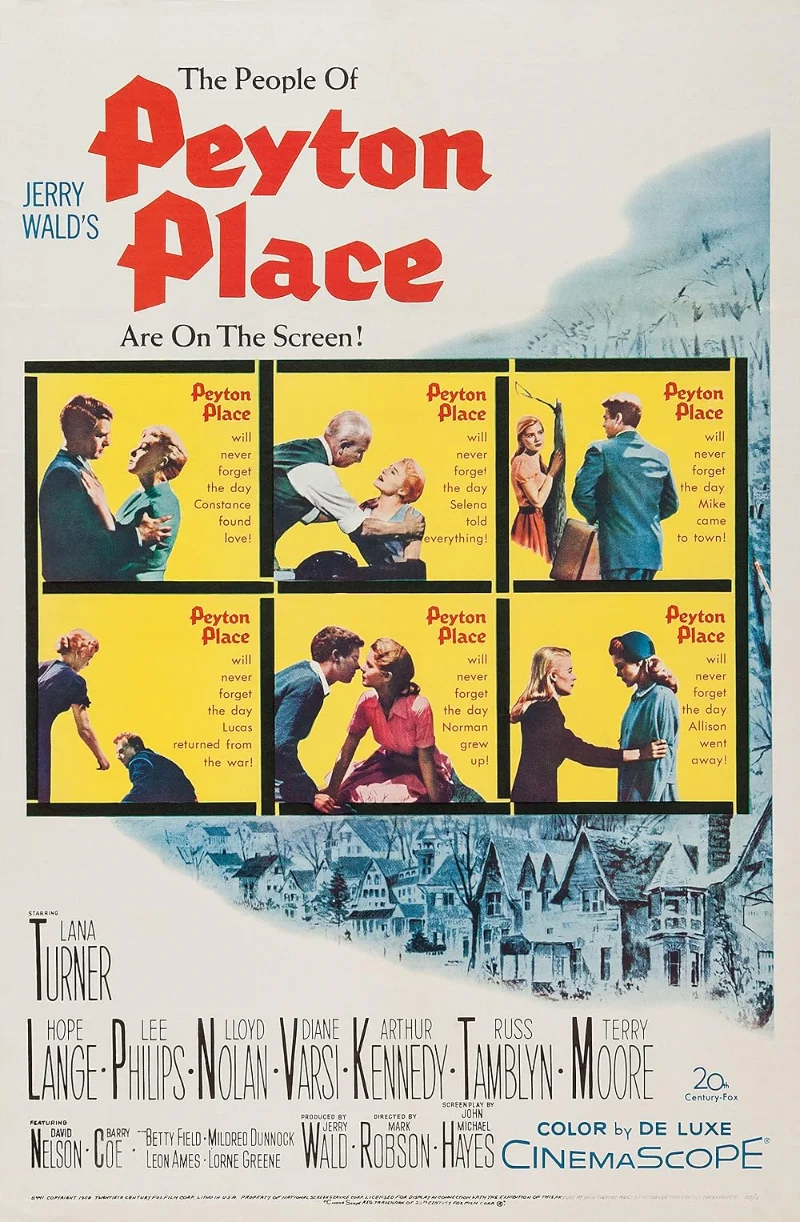
In the landscape of 1950s American cinema, Peyton Place occupies a pivotal position, both for its bold storytelling and as a reflection of the societal mores of the time. Directed by Mark Robson, this film emerged during an era when Hollywood began to peel back the layers of small-town America, exposing the often sordid secrets beneath its seemingly idyllic surface. This melodramatic adaptation of Grace Metalious’s novel resonated with audiences then, not only as entertainment but also as a biting critique of moral hypocrisy, encapsulating the conflict between public facade and private truth.
The narrative centers around the lives of the residents in the fictional town of Peyton Place, where family dynamics are intricately woven into the fabric of the community. The film explores how the personal and the societal clash in ways that reveal deeply ingrained prejudices and hidden desires. Themes of infidelity, unwed motherhood, and the quest for identity are prominent, showcasing the struggle of characters such as Allison MacKenzie, who seeks both love and acceptance against the backdrop of small-town judgment. The critical consensus highlights the film's ability to engage viewers through its dramatic storytelling, encouraging a closer examination of how familial bonds can entrap as well as nurture individuals.
Critically, Peyton Place has been described as melodramatic and engaging, employing a sweeping scope that allows for an exploration of myriad characters and their interconnected lives. This approach resulted in a film that, despite its over-the-top moments, maintains a tasteful narrative style that resonates with its audience. The layered storytelling not only captivates but also prompts viewers to reflect on the broader implications of the characters' actions, especially regarding moral hypocrisy prevalent in 1950s society. The film's backdrop of a small New England town becomes emblematic of a larger cultural critique, reinforcing the notion that secrets can exist even in the tightest-knit communities.
Mark Robson's direction elegantly balances the film’s dramatic elements with its romantic and suspenseful aspects, ensuring that Peyton Place remains an engaging work. The cinematography and score enhance the emotional weight carried by the story, creating a rich atmosphere that complements its thematic concerns. The spells of melodrama, while at times bordering on the exaggerated, serve to underscore the critical commentary on morality and deceit that lies at the heart of the film. The juxtaposition of beautiful landscapes with the dark realities of its characters’ lives paints a poignant portrait of conflict and resolution.
Ultimately, Peyton Place endures not simply as a cultural artifact of its time but as a compelling narrative about human nature and society. It challenges viewers to grapple with perennial questions of privacy, integrity, and the masks we wear. The film's relevance continues to resonate, inviting contemporary audiences to consider the ways in which our own lives may mirror the struggles depicted on screen. Through its intricate storytelling and exploration of family dynamics, Peyton Place remains a significant entry in the canon of American cinema.