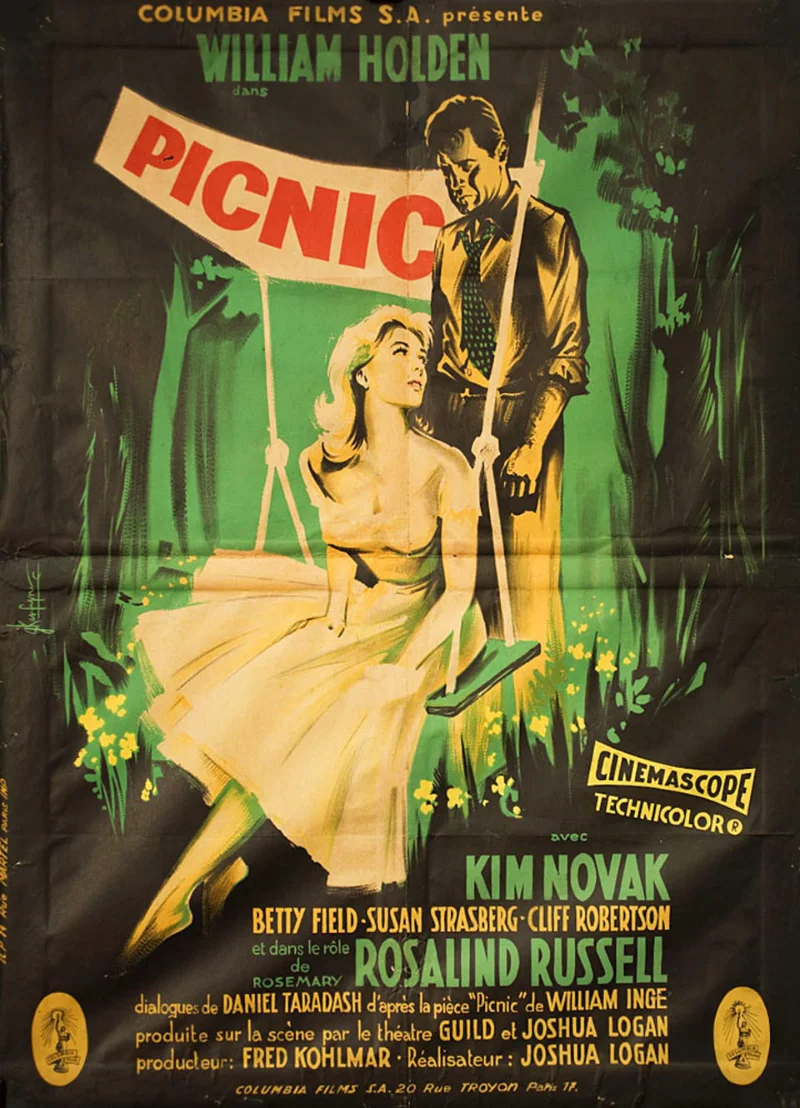
Picnic (1955), directed by Joshua Logan, is a film deeply entrenched in the mid-20th century American cultural landscape. Adapted from William Inge's Pulitzer Prize-winning play, the film offers a cinematic exploration of small-town life, revealing the fluctuating values and complex dynamics of a post-World War II society. Logan’s adaptation is characterized by its rich character development and dramatic flair, embodying the emotional undercurrents of desire and societal expectation. In its portrayal of a Kansas town, Picnic captures the nuances of Americana, while also reflecting the societal shifts of an era grappling with newfound freedoms and muted impulses of ambition.
The film pivots around the arrival of Hal Carter (William Holden), a charming drifter whose magnetic presence disrupts the placid lives of the townspeople, particularly the women, awakening latent desires and aspirations. Central to the narrative are themes of romantic tension and class differences, as Hal's working-class background starkly contrasts with the more refined aspirations of the other characters, including Madge Owens (Kim Novak), who finds herself torn between her predictable existence and the intoxicating possibilities Hal represents. This dynamic raises uncomfortable questions about social status and the sacrifices made in pursuit of love and acceptance.
Critics have lauded Picnic for its character-driven approach, weaving intimate storytelling with broader societal observations. The film poignantly illustrates the interplay between nostalgia and the harsh realities of life, encapsulating a sense of longing not only for romance but for a more fulfilled existence. The romantic tension is not merely a personal struggle but a reflection of the broader societal constraints of the time, with the characters often caught between their desires and their duties, echoing the sentiment that the past can haunt even the most seemingly idyllic settings.
Furthermore, the film’s cinematography and direction exemplify the craftsmanship of 1950s filmmaking. Logan’s ability to balance dramatic moments with moments of tender introspection allows the film to resonate on multiple levels, drawing viewers into the emotional landscapes of its characters. The aesthetics of the film, from the sun-drenched streets of the town to the intimate banter of the characters, create a vivid portrayal of a world that feels both familiar and foreign, further deepening the audience's engagement with the narrative.
Ultimately, Picnic stands as a significant work within Logan's oeuvre, highlighting his capacity for tackling complex emotional themes with sincerity and depth. The film not only entertains but also invites reflection on the eternal struggle between dreams and reality. As it underscores the perennial issues of love, longing, and social disparity, Picnic remains a poignant commentary on the human condition, ensuring its place as a classic in American cinema.