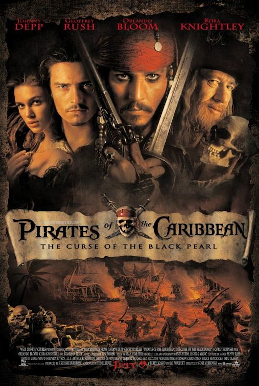
Released in 2003 and directed by Gore Verbinski, Pirates of the Caribbean: The Curse of the Black Pearl ushered in a new era of Disney film experiences by blending adventure with supernatural elements. Built on the popularity of the theme park attraction, the film became a significant milestone in cinema history, showcasing Verbinski's knack for creating visually stunning and thematically rich narratives. It marked a turn for this venerable production company, demonstrating that family-friendly entertainment could also embrace risk, excitement, and a healthy dose of humor, thus redefining expectations for future blockbusters.
The film follows the swashbuckling escapades of Captain Jack Sparrow, portrayed with irresistible charm by Johnny Depp. His engaging performance, filled with wit and whimsy, is complemented by a supporting cast that includes Orlando Bloom as Will Turner and Keira Knightley as Elizabeth Swann. Together, they navigate a world teeming with cursed pirates, treasure hunts, and fantastical sea creatures, creating a richly textured environment that invites audiences to suspend disbelief and immerse themselves in high-seas adventure. The interplay between humor and action is deftly balanced, allowing the film to explore deeper themes such as loyalty, love, and the consequences of greed, all while maintaining a lighthearted spirit.
Critically, The Curse of the Black Pearl earned accolades for its enthralling action sequences and cleverly constructed plot. Reviewers praised its ability to deliver entertainment without compromising on imagination, a rare feat that set it apart from its predecessors in the action-adventure genre. The film's commitment to thrilling escapades and its willingness to embrace the supernatural, from ghostly pirates to cursed treasure, resonated strongly with audiences, sparking a franchise that continues to capture the imagination of viewers around the world. Its dynamic pacing and creative choreography during fight scenes contributed significantly to its status as an action-packed cinematic experience.
Moreover, the humor embedded throughout the film enhances its overall appeal, making Pirates of the Caribbean: The Curse of the Black Pearl not just a story of adventure, but a comprehensive experience that melds laughter with excitement. Both children and adults found joy in its clever one-liners and comedic moments, allowing it to transcend generational boundaries and creating a shared cultural experience. Depp's portrayal of Captain Sparrow became iconic, establishing a character that could be simultaneously charming and unpredictable, qualities that resonated with audiences and ensured his place in film history.
With its audacious blend of pirate lore, supernatural elements, and a rhythm of continuous action, Pirates of the Caribbean: The Curse of the Black Pearl successfully captured the essence of classic adventure films while paving the way for a fresh approach to storytelling. Looking back, it is apparent that Verbinski's directional choices and the collaborative efforts of the entire cast and crew breathed new life into a venerable genre, reaffirming the idea that film can be both a thrilling story and an entertaining escape. The legacy of this film is felt even today, with its influence remaining evident in the plethora of adventure films that followed in its wake.