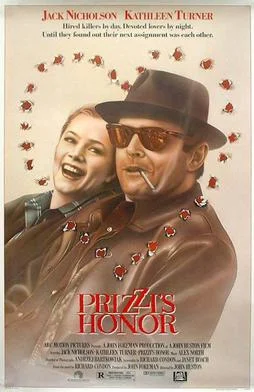
Released in 1985, Prizzi's Honor marks a notable entry in John Huston's illustrious career, which is characterized by a focus on flawed characters and complex moral dilemmas. Renowned for tackling themes that dissect human nature with a sharp lens, Huston expertly navigates the territory between dark comedy and a mafia drama, creating a work that feels both timeless and distinctly relevant. The film offers a sardonic take on the intertwining worlds of love and betrayal set against the backdrop of organized crime, framing its narrative in a way that is as amusing as it is sobering. This blending of genres positions Prizzi's Honor as a significant piece in cinema history, where the crime film meets biting satire.
At its core, Prizzi's Honor delves into the intricate web of family loyalty and betrayal, examining how personal relationships are frequently overshadowed by the ominous presence of the mafia. The dynamics within the Prizzi family echo larger societal themes, reflecting the moral ambiguity inherent in their choices. The film portrays characters who oscillate between love and treachery, underscoring the complexities of maintaining familial ties amidst morally questionable decisions. Critics have identified this delicate balance between grim and funny as one of the film's strengths, illustrating how Huston has crafted a narrative that is at once a mafia spoof and a poignant exploration of personal integrity.
As the story unfolds, the characters become larger than life, embodying a unique blend of cynicism and humor that feels simultaneously grounded and absurd. Huston’s skilled direction allows Prizzi's Honor to recount a tale that feels richly textured, punctuated by moments of zany comedy and reflective sadness. The film's comedic elements are not just for levity; rather, they serve to highlight the tragic inevitability of the characters’ choices, illuminating a world where loyalty may have a price, and love often comes with strings attached. The humor is dark and often overwrought, intertwining with themes of betrayal that offer no easy answers, leaving viewers pondering the moral implications long after the credits roll.
In this film, the intricate dynamics of family play out not only in the relationships among characters but also in the larger context of mafia politics. The humor is tempered with moments of grim reality, creating a unique atmosphere that is both enjoyable and steeped in a sense of impending doom. Critics have noted the film's ability to be both a cocktail of chaos and a sobering exploration of human motivations, making it a rich tapestry of emotional complexity. This marriage of dark comedy and crime drama not only delivers a memorable cinematic experience but also serves as a sharp critique of family loyalty within the unforgiving world of organized crime.
Ultimately, Prizzi's Honor stands as a treasure within John Huston’s body of work, reflecting his continued fascination with the darker sides of human nature. The film’s lasting impact lies in its ability to evoke laughter while simultaneously pressing viewers to grapple with the moral ambiguities faced by its characters. In a landscape of crime films that often take themselves too seriously, Huston’s craft shines through, making the film a landmark example of how humor can coexist with the darker elements of betrayal and family loyalty. In a world where the direct lines of right and wrong are blurred, Prizzi's Honor emerges as a resounding comic yet sobering reflection on the human condition.