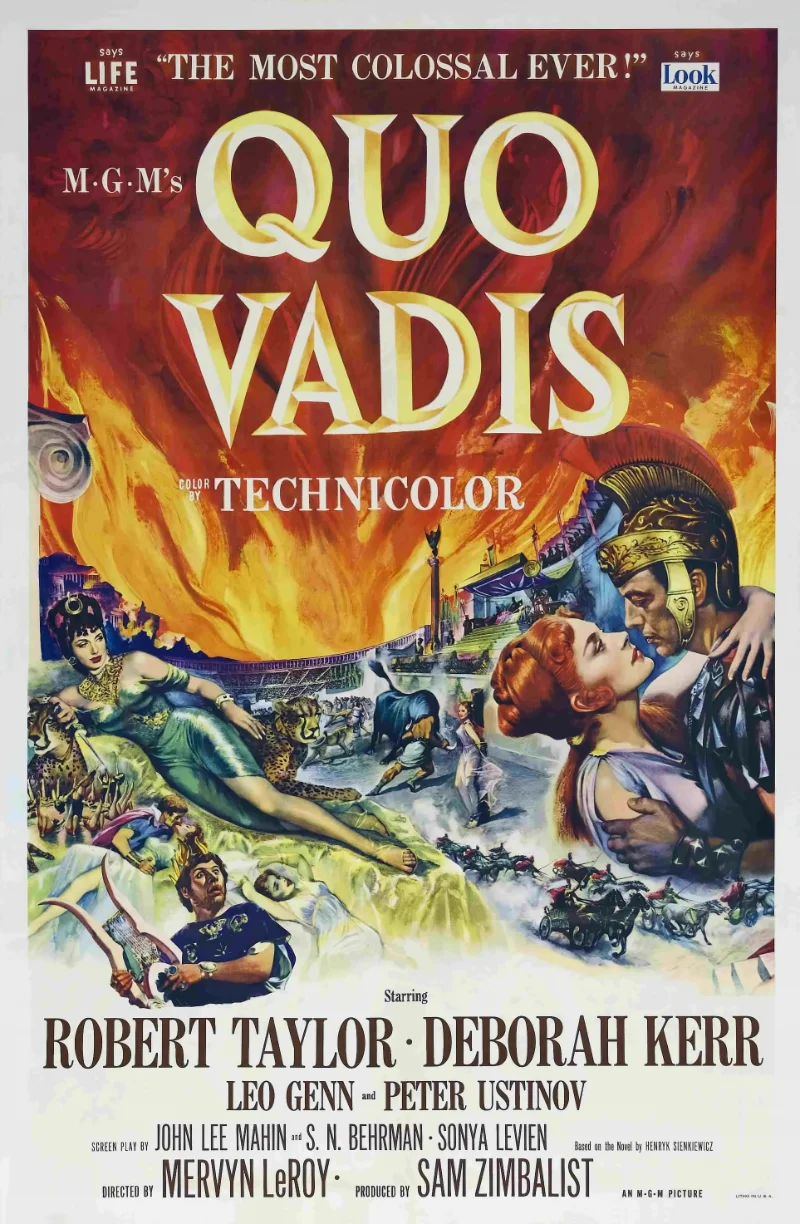
In 1951, Mervyn LeRoy's Quo Vadis emerged as a hallmark of the historical epic genre, encapsulating the essence of a bygone cinematic era characterized by grandiosity and spectacle. The film, nestled within a broader context of post-war Hollywood, represents a response to the cultural climate of its time, merging a lavish production style with weighty themes. This film stands as a testament to LeRoy's directorial prowess, contributing to his legacy as a facilitator of dramatic storytelling in the historical genre, following his success with films like Little Caesar and The Wizard of Oz. While overshadowed by prior epics, Quo Vadis propels itself into a unique orbit, embodying both the scale and intricacies of Roman life amid the rise of early Christianity.
The film's narrative oscillates around the clash between Christianity and paganism, framing its characters against the backdrop of Rome’s decadence during Nero's reign. Critics have noted how this thematic struggle unfolds in a visually stimulating manner, establishing a compelling dichotomy between the moral virtues of Christianity and the hedonistic indulgences of pagan Rome. Visually hypercolored and often melodramatic, Quo Vadis takes the audience through an array of vivid spectacles, from grand coliseum battles to lavish banquets, each designed to immerse viewers in the grandiose culture of ancient Rome. Yet, despite its attempts to convey profound moral conflicts, some contemporary reviewers found parts of the narrative tediously drawn out, questioning whether the film's lavish presentation ultimately masked the depth of its themes.
The aesthetic choices in Quo Vadis resonate deeply with cinema's chapter on spectacle. The production design crafts a Rome filled with opulent structures and vibrant colors that evoke both awe and detachment. This hypercolored representation reflects an era enamored with grandeur, securing its status as a film that entertains while simultaneously inviting reflection on the thematic tensions of love, sacrifice, and faith. For many, the film's entertainment value lies not just in its dramatic narrative arcs but also in its ability to encapsulate a moment in history through a lens of extravagant artistry. Such lavish attention to visual detail, though at times drowning out the narrative pacing, reinforces the enduring appeal of historical epics, which continue to resonate with audiences drawn to tales of tumultuous eras.
Upon its release, Quo Vadis encapsulated the dramatic tensions of its time, an extravagant reflection of both an empire's glory and its moral decline. The relentless pursuit of spectacle serves as both a captivating lure and a critique, as the film navigates the tumultuous waters of faith and authority. In summation, Mervyn LeRoy's compelling storytelling paired with engaging visual grandeur yields a film that, despite its flaws, remains an entertaining artifact of cinema’s vast history, illustrating the eternal struggle between faith and empire in a lavish package that continues to find relevance in modern discourse.