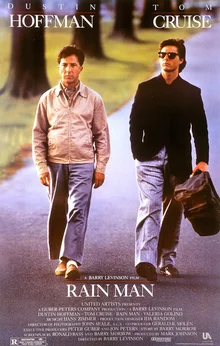
Released in 1988 and directed by Barry Levinson, Rain Man has carved a significant niche in the landscape of American cinema, both for its portrayal of autism and its exploration of intricate family dynamics. At a time when representations of mental health and developmental disorders were often limited or reductive, Levinson's film emerged as a groundbreaking narrative, blending entertainment with poignant social commentary. Starring Dustin Hoffman as Raymond Babbitt, an autistic savant, and Tom Cruise as Charlie Babbitt, his estranged brother, Rain Man not only captivated audiences but also sparked discussions regarding the understanding of autism and the complexities of familial relationships.
Critics have generally positioned Rain Man as a fascinating, albeit unrealistic, portrayal of a deeply misunderstood condition. Hoffman's nuanced performance offers a glimpse into the world of autism, showcasing both the remarkable capabilities and the profound challenges faced by individuals on the spectrum. While some reviews commend the film for its enlightening approach, others mark it as distinctly walled-off from the realities many experience, rendering the narrative somewhat disappointing in its oversimplification of autism. This dichotomy in perception illustrates the fine line the film walks between fostering understanding and reinforcing stereotypes.
The central theme of Rain Man revolves around personal growth, a journey that is not just about Charlie’s evolution from a self-centered businessman to a more empathetic brother, but also about the subtle transformations in Raymond's own sense of identity and agency. As Charlie navigates the challenges of caring for his brother, he learns to accept both Raymond's unique qualities and their shared history, fostering a deeper connection that transcends their troubled familial past. This emotional evolution is compelling, providing a narrative weight that resonates with audiences on multiple levels, even if some critics argue that it simplifies the complexities involved in caregiving for someone with autism.
At its core, Rain Man serves as a reflection of the 1980s American ethos, a time characterized by an increasing awareness of mental health issues interwoven with burgeoning family dynamics in popular media. Levinson's film is a landmark in this context, illustrating both the notion of acceptance within family relationships and the personal growth that arises when individuals confront their differences. Through its intricate plot and profound character development, the film invites viewers to engage with the themes of compassion and understanding, albeit with a narrative framed by the limitations of Hollywood storytelling.
Ultimately, while Rain Man may face critiques for its portrayal of autism as unrealistic or overly simplistic, it remains a significant work in the canon of American film history. Its lasting impact can be seen in how it sparked a broader conversation about autism, acceptance, and the nuanced relationships that define family life. As audiences continue to reflect on the film decades later, it serves as both a touchstone and a conversation starter, encouraging a deeper understanding of the multifaceted nature of familial bonds and personal growth.