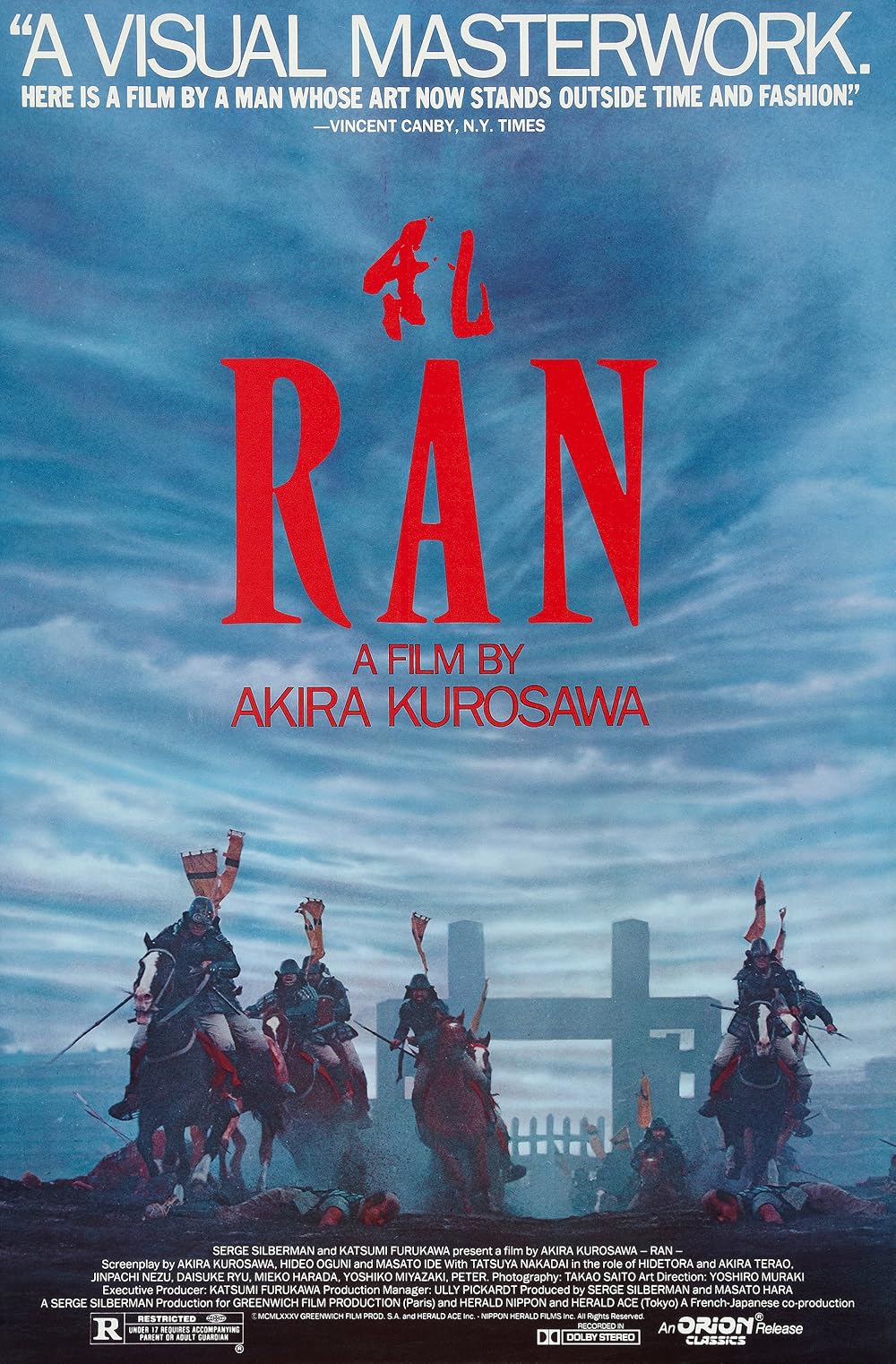
Akira Kurosawa’s Ran stands as a monumental achievement in the director's illustrious career and is a landmark in cinema history. Released in 1985, this adaptation of Shakespeare's King Lear unfolds against the backdrop of Japan's feudal era, showcasing Kurosawa's profound understanding of complex human emotions and societal dynamics. The film blossomed from Kurosawa's mature exploration of themes such as power, betrayal, and the disintegration of familial bonds. With a breathtaking visual palette and an authoritative directorial style, Ran encapsulates the tragic essence of its narrative, making it a pivotal work in the realm of epic filmmaking.
Critical consensus underscores Ran as visually stunning, with its sweeping landscapes and meticulously crafted battle scenes that rival any of the great war epics in film history. Kurosawa's use of color is striking, imbuing each frame with symbolic weight that enhances the film's themes of chaos and strife. This emphasis on aesthetics interweaves with the narrative, as the vivid visuals serve not merely as adornment, but as integral components that deepen the viewer's engagement with the tumultuous realities faced by the characters. The tragic trajectory of the story renders it an emotional experience, with characters grappling with loyalty, ambition, and ultimately, their own destruction.
The film's exploration of family dynamics presents a harrowing reflection on the bonds that can devolve into division and treachery. The disintegration of the ruling family becomes a poignant commentary on the depravity that power fosters. As each of the sons seeks to carve out their path towards dominance, it is the frail remnants of love and loyalty that shatter amidst the ensuing betrayal. Kurosawa deftly illustrates how familial allegiance can become a catalyst for conflict, capturing the complexity of human relationships amidst the broader chaos of war.
Moreover, Ran is notable for its authoritative performances, particularly that of Tatsuya Nakadai, whose portrayal of the aging warlord embodies the tragic consequences of pride and the folly of hubris. Critics have remarked on how Nakadai's nuanced performance anchors the film's emotional core, making his descent into madness not just a narrative inevitability, but a deeply affecting experience for audiences worldwide. As he grapples with his failing dominance and the betrayal by those he once trusted, the performance resonates with pathos and dignity.
Ultimately, Ran is more than just an adaptation of a classic literary work; it is an exploration of timeless themes that echo throughout the fabric of human history. The film's epic scale and tragic narrative invite viewers to ponder the cycles of power and the chaos they engender. In this way, Kurosawa's Ran transcends cultural and temporal boundaries, affirming its place as one of the greatest cinematic achievements that reflects the profound and often tumultuous intricacies of the human condition.