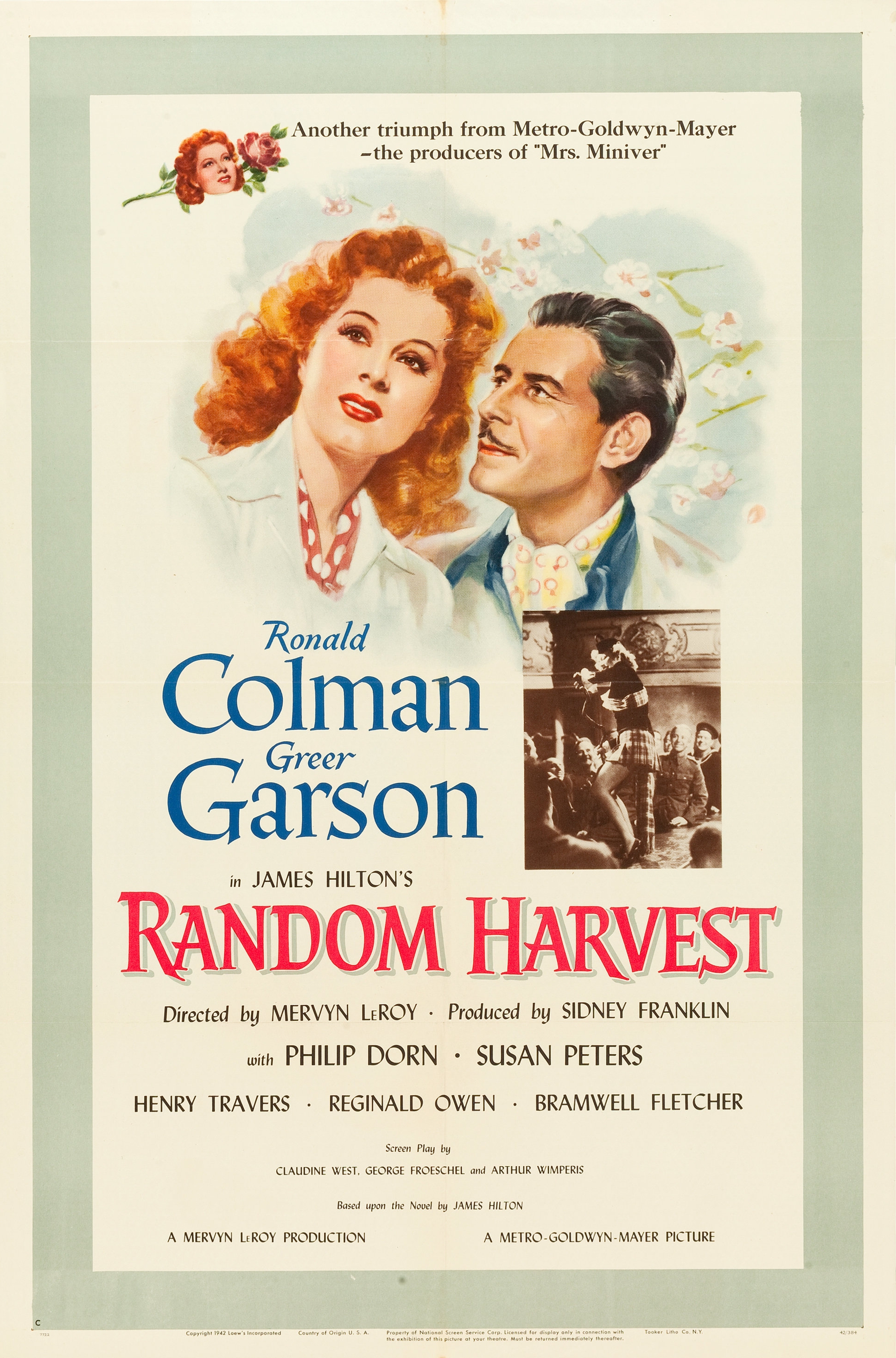
Random Harvest (1942), directed by Mervyn LeRoy, stands as a poignant exploration of memory and identity set against the backdrop of World War II. This film, notable for its melodramatic narrative and sentimental storytelling, captures a transformative period in the director's career, aligning with his tendency to delve into complex emotional landscapes. LeRoy, known for his ability to blend romance with compelling personal dilemmas, crafts a tale that resonates deeply with audiences, embodying the classic melodrama style that characterized early 1940s cinema.
Central to Random Harvest is the theme of amnesia, illustrated through the journey of the protagonist, Paul, played by the charismatic Ronald Colman. After suffering a war injury, Paul loses his memory and inadvertently slips into a new life marked by love and an ethereal sense of identity. The film captures his struggle as he navigates the dual realities of a blossoming romance with a spirited woman, portrayed by Greer Garson, and the shadow of his forgotten past. This conflict not only drives the narrative but also poses profound questions about how identity is constructed through memory and relationships.
Critical consensus highlights the film's ability to evoke deep emotional responses, as viewers are drawn into the characters' plight. The romance between Paul and Garson's character is celebrated for its warmth and tenderness, serving as an anchor in Paul's tumultuous journey. LeRoy’s direction magnifies the stakes of love intertwined with loss and the struggle for personal reconciliation in a world altered by war. This intersection of love and amnesia creates a rich tapestry that is both relatable and heart-wrenching, as characters grapple with their past and the impacts of memory.
The execution of these themes showcases LeRoy’s craftsmanship in cinema, merging melodramatic elements with the overarching question of who we are when stripped of our memories. Critics have noted Random Harvest for its emotional depth and romantic spirit, often reflecting on its capacity to engage audiences in a discussion about the fragility of identity. This film serves not only as a narrative of personal rediscovery but also as a mirror reflecting societal struggles during a time of conflict, thereby elevating it to a classic status within film history.
In sum, Random Harvest remains an essential entry in Mervyn LeRoy’s body of work, demonstrating his skill in weaving complex emotional narratives that resonate across generations. Its examination of love, identity, and the psychological turmoil induced by war captures a particular zeitgeist, making it a touching narrative still relevant to contemporary discussions about memory and personal history. The film's ability to resonate emotionally with audiences affirms its place in the annals of classic cinema, leaving viewers contemplating the essence of self amidst the turbulent currents of life.