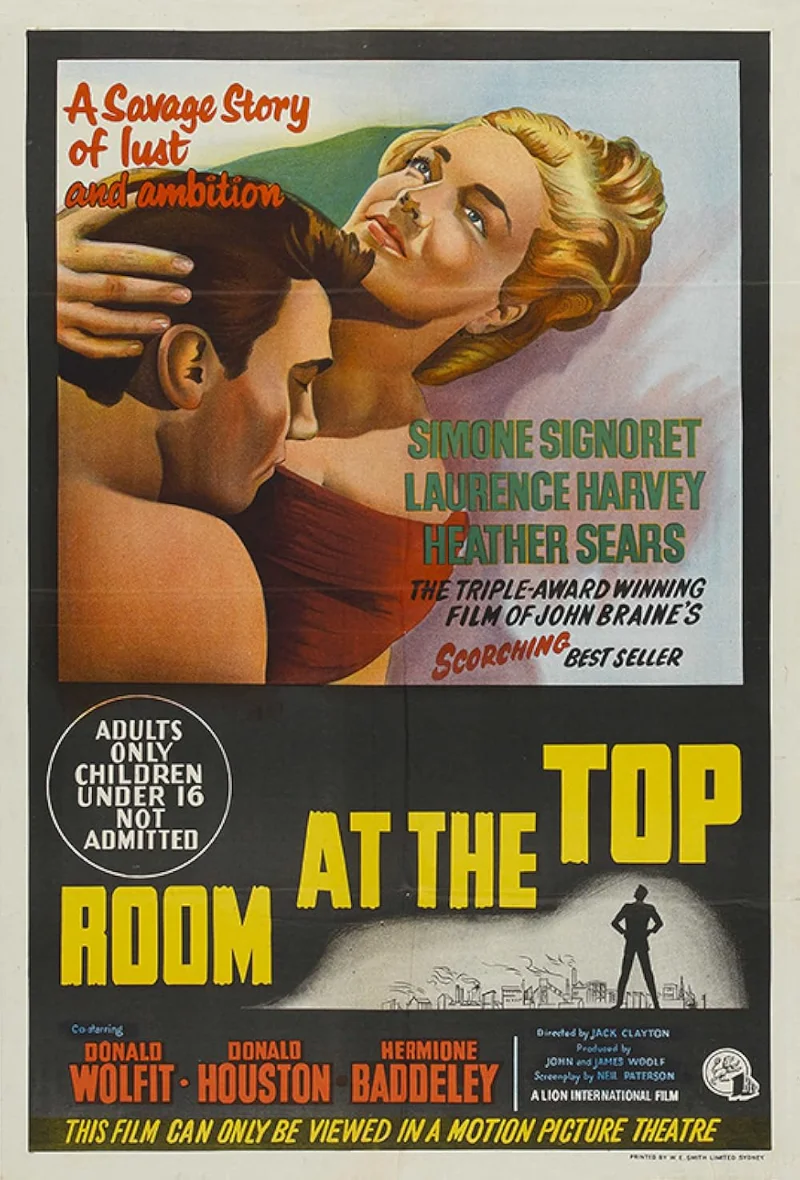
Room at the Top, directed by Jack Clayton and released in 1958, marked a significant moment in British cinema by introducing a raw and unvarnished portrayal of class struggle and personal ambition. Emerging during a time when Hollywood was still largely focused on glamorous depictions of life, this film provided a gritty lens that examined deeply personal conflicts set against the backdrop of post-war England. Clayton, known for his ability to evoke emotion and create atmosphere, utilized the screenwriter's adaptation of John Braine's novel to explore the complexities of social realism, which would resonate with audiences grappling with rapid societal changes.
At its core, Room at the Top navigates the treacherous waters of class conflict through the character of Joe Lampton, a working-class man yearning for status and security. His relentless desire to climb the social ladder introduces viewers to a narrative infused with ambition and betrayal, revealing the often toxic masculinity that governs the relationships within the film. Critics have widely recognized how Lampton’s journey is marked by a heavy emotional weight, turning the pursuit of love and success into a Shakespearean tragedy, where every personal victory is shadowed by moral compromise and interpersonal ruin.
The film's romantic entanglements further complicate the class struggle narrative. Joe's relationships with Alice and the socially prominent Susan create a juxtaposition between idealistic love and the harsh realities of social expectations. As he navigates these relationships, the emotional intensity of the film deepens, reflecting a profound examination of personal desires against the harsh realities of societal limitations. Through this lens, Room at the Top offers not just a critique of class systems but also an insightful commentary on the human condition, demonstrating how ambition can twist personal connections into vehicles of betrayal.
Critics have labeled Room at the Top as provocative, not only for its frank discussions of social mobility and toxic masculinity but also for its depiction of the struggles faced by individuals desperately trying to escape the confines of their class. The film's gritty realism, infused with emotional depth, has been appreciated for its ability to elicit empathy, encouraging audiences to reflect on their values and the societal structures that shape their lives. As a result, it remains a compelling piece that still resonates in discussions about class and ambition today.
Ultimately, Room at the Top stands as a landmark film in Jack Clayton's oeuvre, showcasing his talent for blending emotional complexity with social critique. Its legacy continues to influence filmmakers and audiences alike, not only for its bold narrative but also for its capacity to reveal the darker sides of human aspiration. As society continues to grapple with themes of inequality and ambition, the film serves as a stark reminder of the consequences that often accompany the relentless pursuit of higher status.