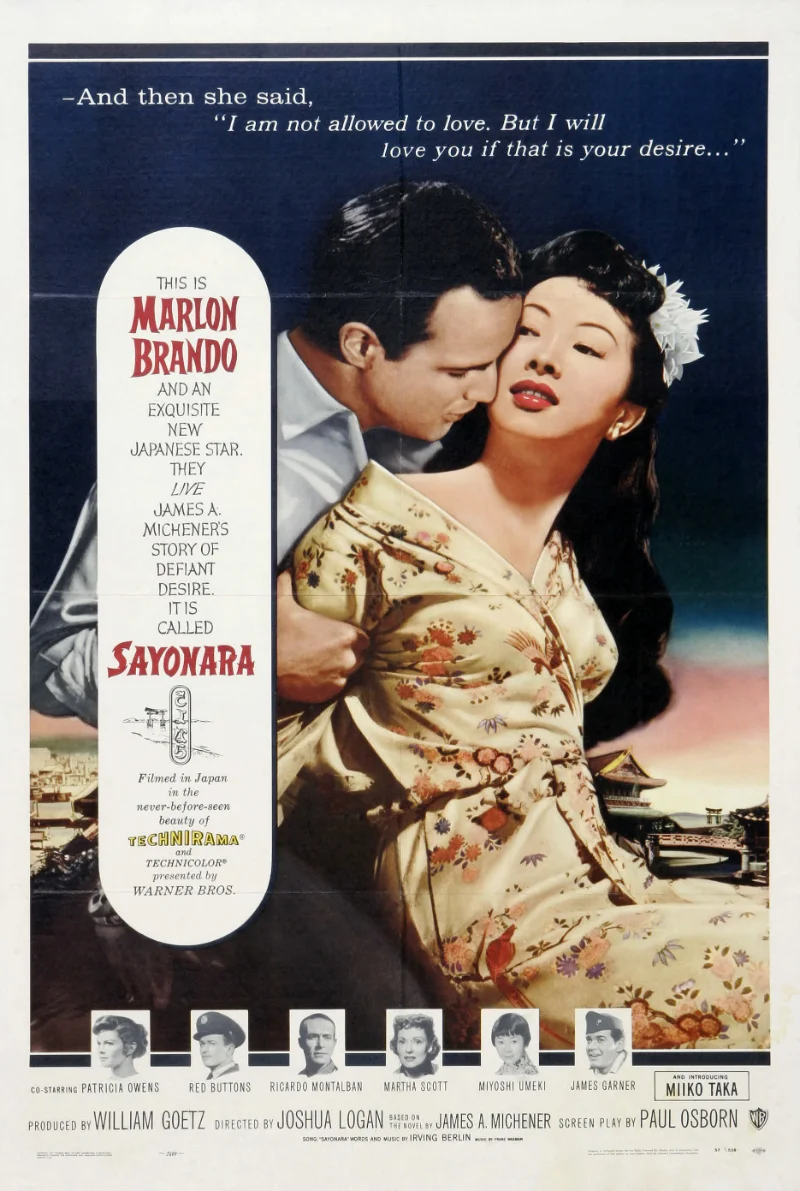
Sayonara, directed by Joshua Logan, occupies a notable place in the annals of cinema, emerging in 1957 during a period marked by shifting societal attitudes toward race and cultural identity. Based on James A. Michener's best-selling novel, the film juxtaposes post-war sentiment with a heartfelt exploration of love, creating a narrative that is both uniquely American and deeply resonant with Japanese themes. Logan, known for his ability to blend drama and musicality, here intermingles romantic melos with cultural exploration, laying a rich foundation for discussions surrounding interracial marriage and the complexities of two distinct cultures intermingling in the aftermath of war.
Critics have long recognized Sayonara as a work that deftly navigates the challenges of cultural representation. The narrative follows an American Air Force major who falls in love with a Japanese actress, encapsulating the struggles and triumphs of their relationship amidst societal expectations and prejudices. This romantic drama foregrounds themes of cultural superiority and the evolving attitudes of a nation grappling with its identity in the aftermath of conflict. The film not only entertains with its energetic musical elements but also serves as a cultural bridge, highlighting the beauty and challenges of interracial relationships during an era when such unions were often fraught with controversy.
In addition to its thematic depth, Sayonara is distinguished by its musical adaptation, featuring a score that has remained memorable in the film industry. The tuneful compositions not only enhance the romantic atmosphere but also contribute to the film's overall impact, underscoring the characters' emotional journeys. Logan’s ability to create a cinematic experience that embraces both drama and entertainment has contributed to the film’s lasting appeal, even securing accolades such as Academy Awards for its artistic achievements.
The film's portrayal of an American soldier's love for a Japanese woman resonates beyond its plot, addressing broader questions of cultural assimilation and acceptance. While Logan explores these topics through a melodramatic lens, he avoids falling victim to sensationalism, instead offering a nuanced representation of love that defies societal constraints. The chemistry between the leads adds a layer of authenticity to their relationship, making their struggles and triumphs palpable.
Ultimately, Sayonara stands as a testament to a transformative time in American cinema, where stories began to reflect a more complex and inclusive narrative. As the cultural landscape evolved, Logan’s film remains a cultural artifact that challenges viewers to reflect on the intersection of love, race, and social progress. It captures a moment frozen in time, where melodrama and romantic idealism coalesce, leaving an indelible mark on both its audience and the film industry as a whole.