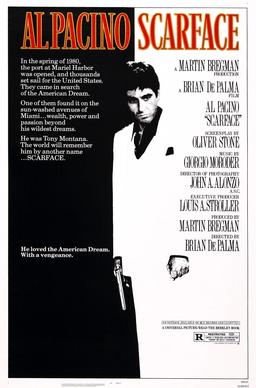
Released in 1983, Brian De Palma’s Scarface has etched its mark on the pantheon of American cinema, standing as a raw, unflinching portrayal of the violent ascent and inevitable decline of a drug lord. Set against the vibrant backdrop of Miami in the early 1980s, the film offers a stark examination of the American Dream, a dream that morphs into a nightmarish reality for its protagonist, Tony Montana, portrayed with intense ferocity by Al Pacino. De Palma, known for his audacious style and controversial subject matter, delivers a brutal narrative that invites both admiration and repulsion. In crafting Scarface, he not only aimed to showcase the glamor and excess associated with the criminal underworld but also to expose the hollowness of such aspirations when greed and violence become the sole advocates of one’s success.
Critical consensus surrounding Scarface often emphasizes its themes of ambition, excess, and the dark underbelly of the American Dream. The film’s narrative arc follows Tony Montana’s meteoric rise from a Cuban refugee to a powerful drug kingpin, intertwined deeply with the myth of success that America offers. As Montana climbs the ranks of the drug trade, the film portrays violence as an essential, albeit brutal, component of his journey. Critics have frequently pointed out the unsubtle nature of the storytelling, highlighting the graphic violence and excess that symbolize Tony's transformation. This portrayal is both visceral and intense, contributing to the larger commentary on the corrupting power of wealth and authority.
The intensity of Scarface is matched by its visceral execution, with De Palma utilizing stylistic flourishes that encapsulate the film’s chaotic essence. The over-the-top dramatization of Tony's confrontations, whether in his lavish mansion or in the streets of Miami, creates a heightened sense of realism that is simultaneously mesmerizing and disturbing. This duality reflects the filmmakers' intentions to elicit a complicated response; audiences are drawn to Montana’s charisma, even as they are repulsed by his brutality. The violence in Scarface, while shocking, serves as a critical device that underscores the cost of unbridled ambition in a cutthroat world.
In the broader context of De Palma’s body of work, Scarface stands as a significant milestone, echoing themes of obsession and the costs of desire found in his previous films. It marks a peak in his exploration of characters who are often morally ambiguous yet compelling. The film's controversial reception and its violent content sparked discussions that transcended popular culture, prompting deeper investigations into the representation of crime and masculinity in cinema. Furthermore, Scarface has left a lasting legacy, influencing countless filmmakers and becoming ingrained in popular culture as a symbol of excess and the pitfalls of the American Dream.
Ultimately, Scarface serves both as a cautionary tale and a cultural commentary, warning against the seductive nature of power and wealth while simultaneously captivating audiences with its brutal artistry. The film's unapologetic depiction of violence and ambition encourages a reflection on the nature of success and the all-encompassing drive that can lead to one’s downfall. Through Tony Montana’s tragic story, De Palma asserts that the pursuit of the American Dream, when intertwined with greed and excess, often concludes in a dramatic, and violent, crash, an enduring lesson that resonates through the annals of cinema.