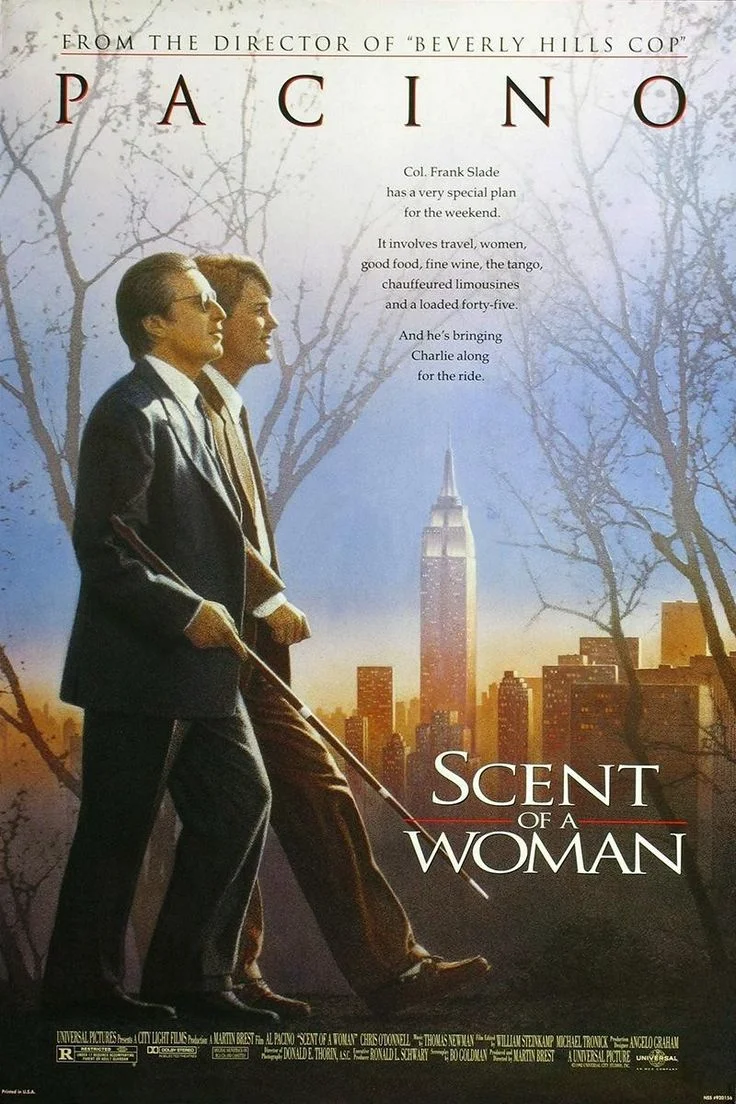
In exploring the depths of humanity and moral complexity, Scent of a Woman, directed by Martin Brest, stands as a notable entry in 1990s cinema. Released in 1992, this film not only showcases Al Pacino's celebrated performance as the blind, cantankerous Lieutenant Colonel Frank Slade, but also serves as a magnificent testament to the era's thematic explorations of mentorship, redemption, and friendship. As Brest's follow-up to the popular film Beverly Hills Cop, Scent of a Woman signifies a shift toward more serious narratives, reflecting the emotional turbulence that defines the decade's cinematic landscape.
Critical consensus around Scent of a Woman reveals a polarized view, with some hailing it as a tour de force of emotional storytelling, while others critique its length and melodramatic tendencies. The film's exploration of mentorship is powerful, focusing on the relationship between Frank Slade and Charlie Simms, played by Chris O'Donnell. Their dynamic is emblematic of an unlikely friendship that blossoms amid challenges, imbuing the narrative with layers of complexity. Critics laud the film for showcasing the redemptive arc of Frank's character, a man grappling with his own existential crises while imparting wisdom to his young charge. However, the excessive nature of certain scenes, coupled with moments of overacting, leaves the film teetering on the edge of melodrama, generating mixed reactions among audience members and reviewers alike.
Moreover, the film's lengthy runtime raises questions about pacing and narrative focus. Many contend that while the sweeping themes of friendship and redemption resonate, the execution often feels overextended and occasionally unimpactful. Critics note that certain emotional peaks, while undeniably powerful, can feel excessive, pulling viewers into a territory that oscillates between heartfelt and saccharine. Nevertheless, for many, these moments are counterbalanced by Pacino's monumental performance, which encapsulates the character's darker moments with unflinching honesty, providing a grounding force amidst the film's more extravagant tendencies.
Ultimately, Scent of a Woman is reflective of a time when cinema sought to tackle profound human experiences, navigating the delicate balance between light and darkness. Its themes of mentorship and friendship continue to resonate, proving that even amid excessive displays of emotional storytelling, authentic connections can emerge. While Brest's vision may be marred by a degree of melodrama and overextension, it is this very complexity that invites viewers to ponder the nuances of personal growth and the bonds that shape our lives. In the end, Scent of a Woman endures as a rich, albeit flawed, exploration of redemption, wrapped in the compelling performances that define Bristol's artistic legacy.