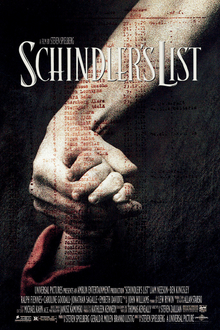
In 1993, Steven Spielberg released Schindler's List, a film that would redefine historical drama and cement his status as a master storyteller. Set against the backdrop of the Holocaust, this haunting narrative follows Oskar Schindler, a German businessman who becomes an unlikely savior for over a thousand Jewish refugees during one of the darkest periods in human history. The film not only marks a turning point in Spielberg's directorial evolution but also stands as a profound meditation on moral ambiguity and humanity amidst evil, themes that resonate powerfully throughout the story and its execution.
The critical consensus surrounding Schindler's List has remained consistently positive, with many reviewers deeming it a masterpiece of cinema. Spielberg's use of stark black-and-white cinematography, punctuated by striking moments of color, enhances the film’s emotional gravitas, creating an indelible experience for viewers. Critics praise the film for its restraint; Spielberg avoids sensationalism, instead opting for a depiction that is emotional yet respectful. This approach allows the storytelling to remain gripping, prompting viewers to confront the devastating realities of the Holocaust without the veil of melodrama.
At its core, Schindler's List grapples with the theme of moral transformation. Schindler himself evolves from a war profiteer into a figure of ethical bravery, highlighting how human compassion can emerge even in the face of overwhelming evil. Spielberg masterfully portrays this complex journey, inviting audiences to reflect on their own moral choices and the capacity for goodness against a backdrop of societal collapse. The film serves not only as a chronicle of survival but also as a poignant reminder of the potential for humanity to shine in the darkest times.
The emotional weight of Schindler's List is further amplified by John Williams' haunting score, which complements the film’s imagery and deepens its impact. The combination of powerful performances, particularly by Liam Neeson, Ben Kingsley, and Ralph Fiennes, further drives home the film's message. This gripping portrayal of real events ensures that the story is not merely told but felt, an achievement that speaks to the indelible power of cinema to educate, evoke empathy, and inspire reflection.
In the broader context of Spielberg's oeuvre, Schindler's List stands as a testament to his versatility as a filmmaker, balancing commercial appeal with profound thematic exploration. It heralds a maturation in his artistic vision, signaling his commitment to addressing complex and often uncomfortable truths. The film’s lasting resonance, coupled with its critical acclaim, solidifies its place in cinema history as an essential work that challenges and engages audiences, prompting a deeper understanding of humanity's capacity for both good and evil.