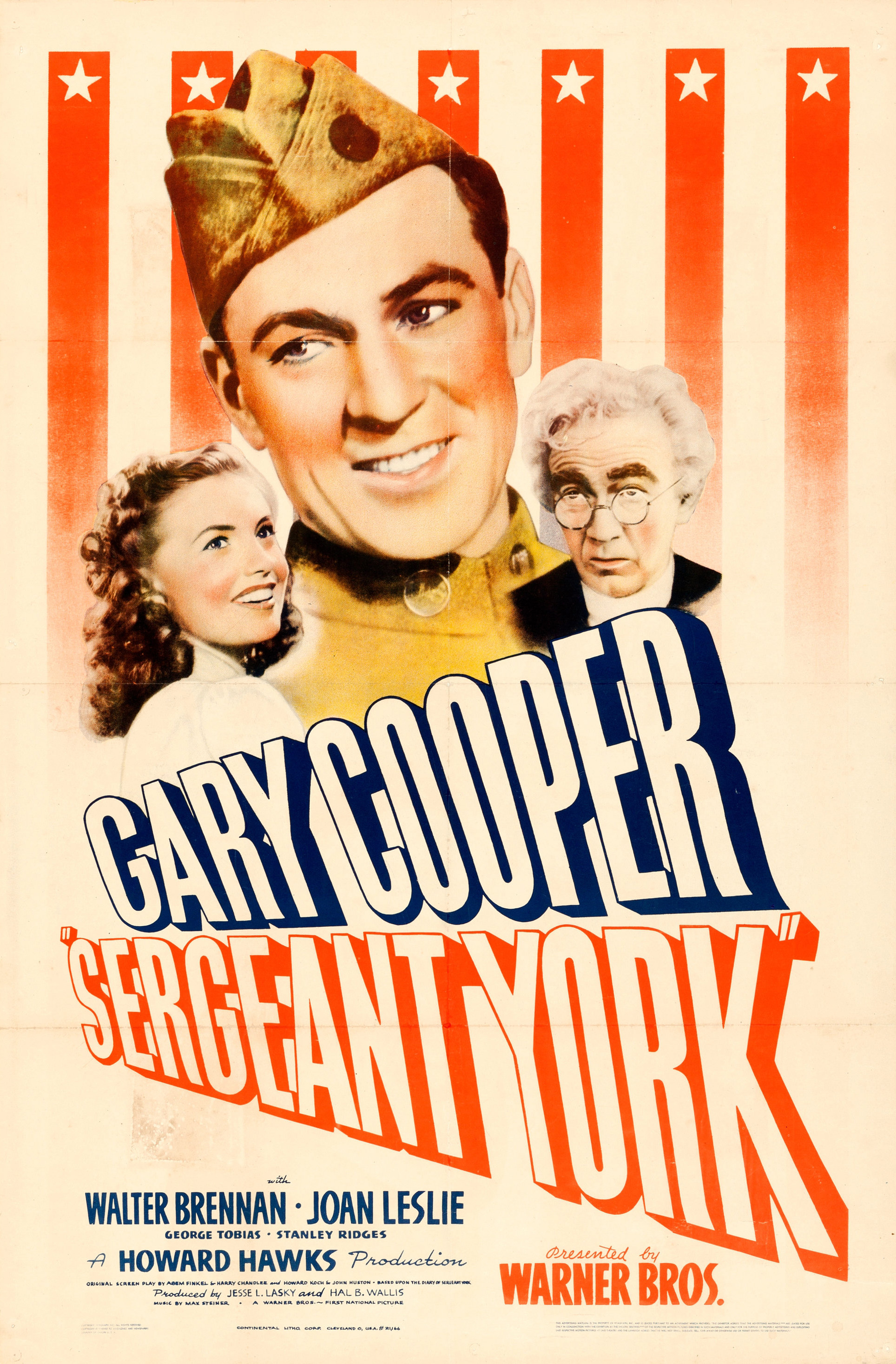
Released in 1941, Sergeant York, directed by the celebrated Howard Hawks, stands as a significant entry in both cinematic history and the director's oeuvre. Hawks, known for his versatile storytelling and strong characterizations, crafted a film that is both a biographical portrayal and a profound commentary on the human condition during wartime. Drawing inspiration from the true story of Alvin York, the film explores the journey of an individual from a hard-drinking pacifist to a decorated war hero, encapsulating a pivotal moment in American cinematic representation of heroism and conflict. This transformational arc is rendered with Hawks’s characteristic balance of humor and seriousness, allowing the film to resonate on multiple levels within the context of World War I and the evolving American identity.
The critical consensus surrounding Sergeant York highlights its thematic focus on heroism and pacifism, underscoring the philosophical dilemmas faced by individuals in wartime. Critics have noted that the film delves deep into the moral conflicts of its protagonist, who must reconcile his deeply held beliefs about non-violence with the societal expectations of bravery and sacrifice. This internal struggle is encapsulated in York's character, a portrayal marked by a palpable sincerity that inspires audiences while challenging conventional notions of masculinity and valor. The film's success can be attributed not only to its compelling narrative but also to the charismatic performance of Gary Cooper, whose portrayal of York is both relatable and mythic, embodying the spirit of resilience that defined a generation.
At the heart of Sergeant York lies an exploration of religion and individualism. York's transformation from a humble farmer to a war hero is grounded in his Christian faith, which serves as both a guiding light and a source of conflict throughout the film. This duality reflects a broader societal debate about the role of faith in warfare, prompting audiences to question the morality of violence even in the name of duty and honor. Through his journey, York emerges not only as a symbol of heroism but also as a testament to the power of personal conviction in the face of overwhelming adversity. This philosophical depth, coupled with the film's engaging storytelling, has ensured its lasting impact and popularity.
Furthermore, the stylistic choices employed by Hawks, ranging from dynamic cinematography to well-timed pacing, contribute significantly to the film's ability to inspire. The visual language is not only a testament to Hawks's directorial prowess but also enhances the film's emotional resonance, enabling viewers to experience York's trials and triumphs fully. In a landscape of films that often glamorize war, Sergeant York presents a more nuanced view that recognizes the complexity of human emotions intertwined with the realities of combat.
In conclusion, Sergeant York remains a profound and thought-provoking film that challenges the status quo of war narratives in cinema. Its exploration of heroism and pacifism encourages viewers to scrutinize their understanding of bravery and sacrifice, making it a vital work that resonates with contemporary audiences. As Howard Hawks navigates themes of transformation, individualism, and faith, he crafts a cinematic experience that is uncompromising in its depth and enduring in its appeal, solidifying the film's place in the annals of American cinema.