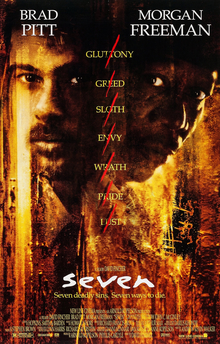
In the realm of 1990s cinema, few films left an indelible mark quite like David Fincher's Seven. This harrowing psychological thriller emerged during a decade characterized by an exploration of darker themes and a penchant for gritty realism. Fincher, who would go on to become renowned for his meticulously crafted narratives and disturbing aesthetic, presented a film that boldly delved into the chilling depths of human depravity. With Seven, he introduced audiences to an experience that simultaneously provoked thought and unease, encapsulating a vision of moral ambiguity that felt both pertinent and unsettling in a world increasingly consumed by nihilism.
The critical consensus surrounding Seven acknowledges its unnerving portrayal of serial murder against a backdrop of urban decay, a reflection of an increasingly disillusioned society. The film’s brutality is not merely for shock value; rather, it serves a larger commentary on the moral decay inherent in humanity. The grisly killings, each representing one of the seven deadly sins, unmask the darkness that lurks within both the characters and the world they inhabit. The intense performances by Morgan Freeman and Brad Pitt further elevate the film’s exploration of moral psychology, as their characters confront not only the physical manifestations of evil but also their own beliefs and ethical boundaries.
Yet, it is Fincher's treatment of suspense and horror that truly sets Seven apart from its contemporaries. The film’s atmosphere is uniquely disturbing, with dim lighting and a cacophony of unsettling sounds that transform the urban landscape into a character of its own. Critics have characterized this aesthetic as both clever and sinister, providing audiences with a visceral experience that grips tightly from beginning to end. This engagement is not limited to the thrill of the chase; it extends to contemplations on hopelessness and the fear that even the virtuous are not immune to the moral failings that surround them.
One of the most haunting aspects of Seven is its conclusion, which culminates in an ending that challenges conventional narrative satisfaction. Here, Fincher posits a universe devoid of easy answers and wrapped in relentless pessimism. This bleak perspective resonates profoundly, leaving viewers grappling with a pervasive sense of despair that lingers long after the credits roll. Such an ending, while controversial, reflects the psychological horror at the heart of the film, the recognition that evil can be not only systemic but deeply personal.
As part of Fincher's oeuvre, Seven serves as a critical cornerstone that informs his later works, where themes of obsession, isolation, and the darker corners of humanity often emerge. In a cinematic landscape that continues to grapple with complex moral questions, Seven remains a quintessential masterpiece, challenging hearts and minds alike to confront uncomfortable truths. Through its unnerving narrative and rich thematic depth, the film not only entertains but also forces a confrontation with the very essence of human nature, ultimately presenting a vision of existence that is as compelling as it is distressing.