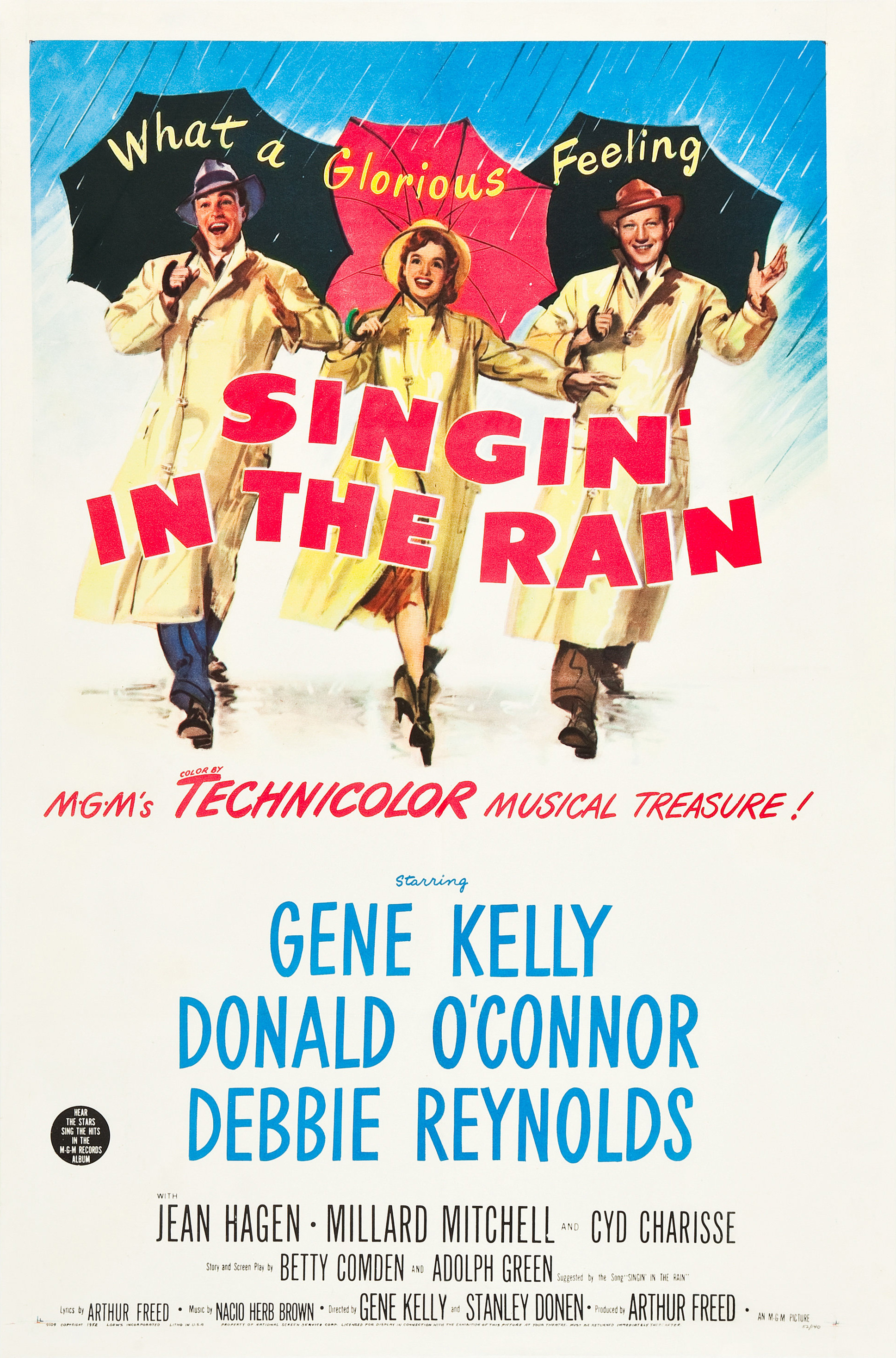
Singin' in the Rain, released in 1952 and co-directed by Gene Kelly and Stanley Donen, stands as a monumental film in the realm of cinema, perfectly capturing the vibrant spirit of Hollywood's golden age. Set against the backdrop of the seismic shift from silent films to talking pictures, the film deftly intertwines themes of artistic expression and the entertainment industry's evolution. It is an innovative exploration of the challenges and triumphs faced by filmmakers during this pivotal moment in cinematic history. Kelly, known for his unparalleled contributions to dance in film, showcases his remarkable talent not just as a choreographer but as a storyteller, illuminating the experience of a world on the brink of a new era.
The critical consensus surrounding Singin' in the Rain emphasizes its timeless nature, a dazzling celebration of joy that resonates with audiences even decades after its initial release. Reviewers consistently note its infectious charm and polished execution, often citing the film's unique combination of romantic comedy and musical elements as a perfect reflection of love and ambition against the chaotic backdrop of Hollywood. This synthesis of genres works to transport viewers into a realm of nostalgia, a sweet reminder of the artistry and exuberance that characterized the mid-20th century film scene.
At its core, the film serves as an exploration of the intersection between commerce and creativity, encapsulating both the struggles and successes of artists in the industry. Through its lighthearted narrative, Singin' in the Rain not only provides delightful entertainment but also invites reflection on the sacrifices behind artistic innovation. The characters, brought to life by a talented ensemble cast, navigate the turbulence of change and uncertainty with infectious optimism, embodying the resilience of creative spirits.
The choreography, an essential aspect of Kelly and Donen's vision, elevates Singin' in the Rain beyond mere spectacle. Each dance sequence is infused with a sense of joy and artistry, transforming the film into a visual feast that celebrates movement as an expression of emotion. The legendary scene in which Kelly sings in the rain has become iconic, symbolizing not just the film itself but also an era marked by artistic revival and joyful exuberance.
In essence, Singin' in the Rain is a beautifully crafted homage to Hollywood's history, merging nostalgia with a fresh perspective on the challenges faced by creators. Its ability to entertain while prompting reflection on the broader implications of artistic expression places it in a unique position within film history. This perfect blend of joy, innovation, and nostalgia continues to captivate audiences, ensuring that the film remains not just a classic, but a vital part of cinematic discourse even today.