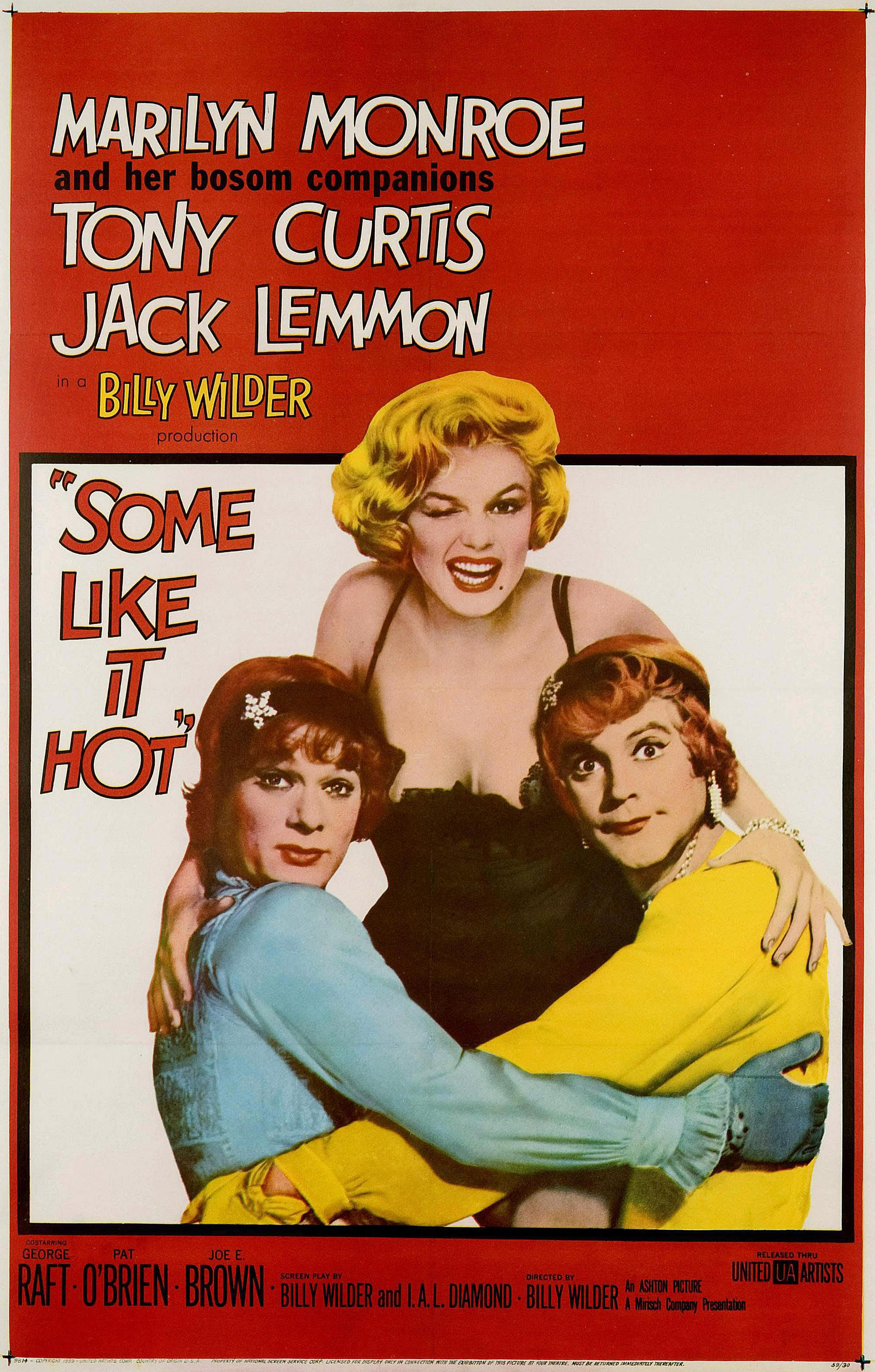
Billy Wilder’s Some Like It Hot stands as a landmark of American cinema, a film that masterfully combines elements of comedy, romance, and social commentary. Released in 1959, it not only signifies a pivotal moment in Wilder’s illustrious career but also represents a transformative period in film history, where the interplay of genre began to embrace more complex themes such as gender identity and cross-dressing. Wilder, known for his sharp wit and insightful critiques of human nature, utilized his signature style to craft a narrative that is both hilarious and pointedly cynical, establishing Some Like It Hot as a timeless classic.
At its core, the film follows two musicians, Joe and Jerry, who, after witnessing a mob hit, find themselves on the run. Their solution, to disguise themselves as women and join an all-female band, opens up a comedic exploration of gender roles that feels just as relevant today as it did in the late 1950s. Critics have celebrated the film’s outrageous situations and witty dialogue, noting that its humor transcends generations. The performances of Tony Curtis and Jack Lemmon, particularly in their cross-dressing roles, showcase not just a commitment to comedic timing but also an exploration of identity that questions societal norms, making the film an early pioneer of feminist and LGBTQ+ discourse in mainstream cinema.
The romantic entanglements of the film further complicate its narrative. Joe’s attempt to woo the band’s lead singer, played by Marilyn Monroe, while posing as "Josephine," creates an irresistible tension that is laden with comedic misunderstandings and heartfelt moments. Monroe’s portrayal of the ingenue is both scintillating and poignant, embodying an era's idealized femininity while subtly hinting at deeper emotional currents. The romantic dynamics play out against the backdrop of a laugh riot that delivers both joy and reflection, positioning Some Like It Hot as more than mere entertainment; it is a commentary on the vulnerabilities of love and friendship.
Critical consensus attests to Some Like It Hot as not just a film, but a cultural phenomenon. It has been described as a peerless masterpiece, a joyous ride that breaks boundaries with its unpretentious humor and poignant observations on society and relationships. The enduring popularity of the film can be attributed to its ability to engage audiences in a multifaceted conversation about identity, all while remaining irresistibly funny. Its brand of comedy, which blends slapstick with sharp social insight, cements its place in the canon of great American films and allows it to resonate with contemporary viewers.
In a landscape where many films are quickly forgotten, Some Like It Hot shines as a beacon of artistic achievement and cultural relevance. Wilder’s deft blending of comedy and themes that address gender fluidity showcases a sensitivity and audacity that remains unmatched. As audiences revisit the film, they not only revisit a story filled with laughter but also engage with a nuanced exploration of identity that pushes the boundaries of genre, confirming Wilder’s status as one of cinema’s great visionaries. In this light, Some Like It Hot is not simply a fun romp through the underworld of 1920s Chicago; it is a film that continues to challenge, entertain, and inspire.