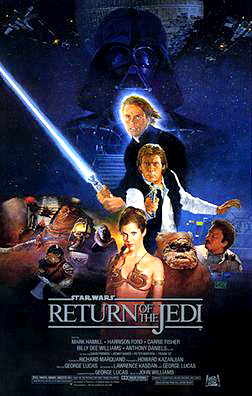
In the vast tapestry of cinema history, few franchises have achieved the same level of cultural impact as Star Wars, and Star Wars: Episode VI - Return of the Jedi (1983) stands as a pivotal chapter in this enduring saga. Directed by Richard Marquand, this film sought to both conclude the original trilogy and encapsulate the imaginative spirit that defined the series. Released at a time when blockbuster filmmaking was gaining its footing, Return of the Jedi combined a sense of adventure and spectacle that resonated deeply with audiences. While it may not be hailed as the best installment by all, it is certainly a worthy conclusion to a mythic journey, brimming with charm and nostalgia.
Critics have noted that Return of the Jedi serves as a blend of thrilling adventure and profound themes of redemption, exploring the complex nature of good and evil through the character arcs of familiar icons such as Luke Skywalker and Darth Vader. This film is characterized by its satisfying culmination of the overarching narrative, bringing to light the idea that even the darkest of adversaries can find their way back to the light. Despite its flaws, including some uneven pacing and reliance on concepts that repeat from earlier films, the movie's imaginative scope and emotional core generate a fulfilling experience for viewers.
The mix of creativity and entertainment permeates Return of the Jedi, where beloved characters band together in a final fight against tyranny. Marquand's direction is often described as charming, with sequences such as the assault on the Death Star and the heartfelt confrontations on Endor highlighting both the film's aesthetic pleasures and its thematic depth. While some may argue that it plays it safe by not straying too far from the formula established in previous films, its ability to craft exciting moments from established lore showcases the brilliance of Lucas's universe and its capacity for storytelling.
Despite being labeled by some as the weakest of the original trilogy, Return of the Jedi is far from being a mere footnote in film history. It provides a complete narrative arc filled with moments of delight and spectacle, affording audiences a chance to revisit a cherished universe as old favorites emerge and evolve. Each viewing serves as a nostalgic reminder of a time when imaginative storytelling reigned supreme in popular cinema. The film remains a testament to the creative spirit behind the franchise, solidifying its place not only in the hearts of fans but also in the annals of cinematic achievements.
Ultimately, Star Wars: Episode VI - Return of the Jedi concludes the saga on a note of satisfaction that resonates with its audience. It encapsulates the essence of what makes Star Wars compelling, its ability to transport us to distant galaxies and, in doing so, reflect our deepest desires for heroism, redemption, and the triumph of good over evil. While it may not achieve the same critical height as its predecessors, it has carved its own niche in film history as a charming and fulfilling adventure, a feast for the imagination that continues to entertain and inspire both new viewers and long-time fans.