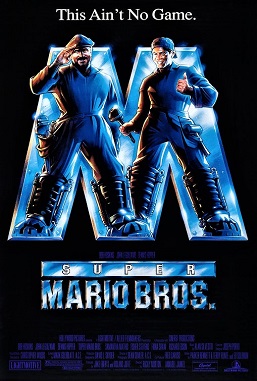
Released in 1993 and directed by Rocky Morton and Annabel Jankel, Super Mario Bros. occupies a peculiar position in both the realm of video game adaptations and the broader landscape of cinema. The film emerged during a time when Hollywood was just beginning to test the waters of translating beloved video game properties into cinematic experiences. Unfortunately, the result has often been characterized as a bizarre artifact, a product of its time that veered into the realm of dystopian fantasy far removed from its source material. The film's setting, a parallel universe where Mario and Luigi navigate a chaotic, dystopian city ruled by the villainous King Koopa, reflects a departure from the vibrancy typically associated with the iconic Nintendo franchise.
Critical reception of Super Mario Bros. has consistently highlighted the film's significant production challenges and muddled narrative. Labeled as a "poor imitation" of the video game series, reviewers frequently pointed out its clumsy script and uneven visual effects that failed to capture the essence of what made the Mario games beloved to audiences. Critics took aim at its frantic pacing and slapstick humor, noting that the film felt shrill and tiresome, struggling to maintain a coherent story that could engage both children and adults. Despite the filmmakers' intent to create a family-friendly adventure filled with action and comedy, it was perceived as a brazenly commercial endeavor lacking in depth and originality.
However, Super Mario Bros. has since developed a cult status, often celebrated for its eccentricities and off-beat charm rather than its alignment with the video game's narrative. This nostalgia factor plays a crucial role in the film's legacy. Over the years, audiences have come to appreciate the film's oddball qualities and its willingness to embrace an imaginative, albeit convoluted, storyline. It stands as a worthy anomaly in cinema history, offering a unique blend of genres that includes both science fiction and family entertainment. Fans often delight in discovering the countless Easter eggs sprinkled throughout the film, igniting conversations around its rich and bizarre visual aesthetics.
Despite its status as a cult classic, the film's initial box office performance and critical mauling reflected a broader skepticism toward video game adaptations, which were still finding their footing in the cinematic landscape. The experience of actors like Bob Hoskins and John Leguizamo, who portrayed the titular characters, was marked by frustration, indicative of the unpredictable production environment and script issues that hindered their performances. Their anecdotes provide insight into the challenges of adapting inherently light-hearted and whimsical video game experiences into a medium laden with higher expectations for storytelling and coherence.
Ultimately, Super Mario Bros. serves as both a cautionary tale and a point of intrigue within Hollywood's attempts to adapt video games. It highlights the risks involved in traversing from gameplay to narrative film, revealing the pitfalls that can occur when translation fails to adequately respect the source material. In retrospect, the film symbolizes not just a misstep in adaptation, but also the potential for creativity and innovation that can arise when filmmakers dare to stray from typical conventions, however bizarre the outcome may be.