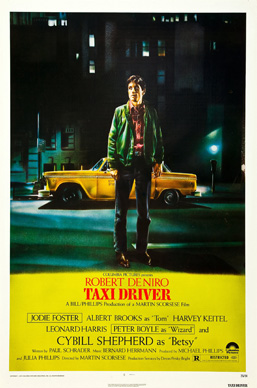
Released in 1976, Martin Scorsese's Taxi Driver stands as a pivotal work in the canon of American cinema, a visceral meditation on alienation and urban isolation. Emerging during a period rife with social upheaval, the film captures the malaise of post-Vietnam War America through the eyes of Travis Bickle, a psychologically scarred Vietnam veteran navigating the dark, gritty underbelly of New York City. This urban landscape, teeming with violence and decay, becomes a character in its own right, an oppressive force that shapes and distorts the psyche of its inhabitants.
Critics have consistently lauded Taxi Driver for its haunting portrayal of loneliness and obsession. The film's protagonist, deeply troubled and profoundly alienated, reflects the societal disconnection felt by many during the 1970s. Scorsese uses Travis’s descent into madness as a chilling commentary on the consequences of isolation in a chaotic world. As he becomes increasingly unmoored, the viewer is drawn into a nightmarish spiral of internal conflict, amplified by the immersive cinematography and Bernard Herrmann's unnervingly atmospheric score, which together evoke a sense of dread and foreboding.
The themes of urban decay and violence permeate every frame of Taxi Driver. Scorsese's lens captures the filth and desperation of the city, reminding audiences that it is not just a backdrop, but a vital part of the narrative. The film's unsettling realism paints a stark picture of a society teetering on the brink, haunted by its collective traumas. This electric portrayal resonates with viewers, offering a compelling examination of the struggle for connection amidst overwhelming darkness, and the lengths to which one man will go to forge his identity and purpose.
In a landscape filled with films about the American experience, Taxi Driver stands out as a riveting exploration of the human condition, fraught with contradictions. While eliciting moments of dark humor, it ultimately presents a chilling and disturbing look at the psyche of a man pushed to the edge. Travis Bickle's journey is not merely a descent into violence but also a reflection of the underlying absurdities of existence, the film juxtaposes comedy against a backdrop of horror, leaving audiences unsettled yet captivated by its complexity.
The legacy of Taxi Driver continues to influence filmmakers and audiences alike, providing a template for character studies steeped in psychological depth and socio-political commentary. As we reflect on its impact, we recognize that Scorsese's work transcends mere entertainment to become an unforgettable exploration of the fragility of human connection in a fragmented world. This profoundly compelling film, steeped in gritty realism, remains a touchstone for discussions of alienation, obsession, and the chilling capacities of the human psyche.