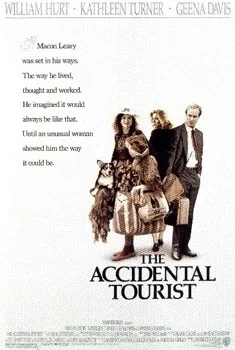
Lawrence Kasdan's The Accidental Tourist (1988) occupies a significant place in the director's oeuvre, which is characterized by a commitment to exploring complex human relationships and emotional landscapes. This film, adapted from Anne Tyler's Pulitzer Prize-winning novel, reflects Kasdan's deft ability to weave together narrative threads of love, loss, and the nuances of family dynamics. As it centers around Macon Leary, played with extraordinary nuance by William Hurt, The Accidental Tourist delves into the often painful journey of grief and the slow process of emotional healing that follows the death of a loved one.
Critics have noted how the film balances its deeply sad moments with an undercurrent of gentle humor, a hallmark of Kasdan's storytelling. While depicting Macon's struggle to reconnect with his emotions and navigate his relationships, particularly with his estranged wife and a quirky dog trainer, the film elicits genuine laughter, creating a delicate contrast to the overarching themes of depression and personal transformation. The performances, particularly by Hurt and Geena Davis, who brings a mesmerizing energy to her role, are tenderly acted and finely observed, resonating with authenticity that draws the audience into the characters' emotionally charged lives.
The critical consensus surrounding The Accidental Tourist recognizes its low-key charm and its capacity to address profound themes without resorting to melodrama. The film's exploration of family dynamics, especially the tension between grief and the desire for connection, is portrayed with a sensitivity that renders its characters both sympathetic and relatable. Critics have highlighted moments of irresistibly funny interactions that serve as a reminder of the resilience of the human spirit even in the face of sorrow, thus underscoring the film's rich emotional texture.
In terms of box office performance, The Accidental Tourist was successful and profitable, benefitting from extensive marketing and a well-timed release that capitalized on its literary pedigree. Its ability to blend humor with sadness resonated strongly with audiences, reflecting a mature approach to storytelling that was somewhat rare for mainstream cinema at the time. The film stands as a testament not only to Kasdan's directorial skill but also to the potential of cinema to explore the depths of human experience in a sincerely engaging manner.
As a significant cinematic work of the late 1980s, The Accidental Tourist effectively captures the essence of personal transformation amidst the chaos of emotional turmoil. It invites viewers to reflect upon their own relationships and the complexities inherent in them, making it a timeless exploration of love and loss. Through its rich character development and finely crafted narrative, the film holds a lasting place in the canon of romantic dramas, asserting that even in grief, the quest for connection remains a driving force in our lives.