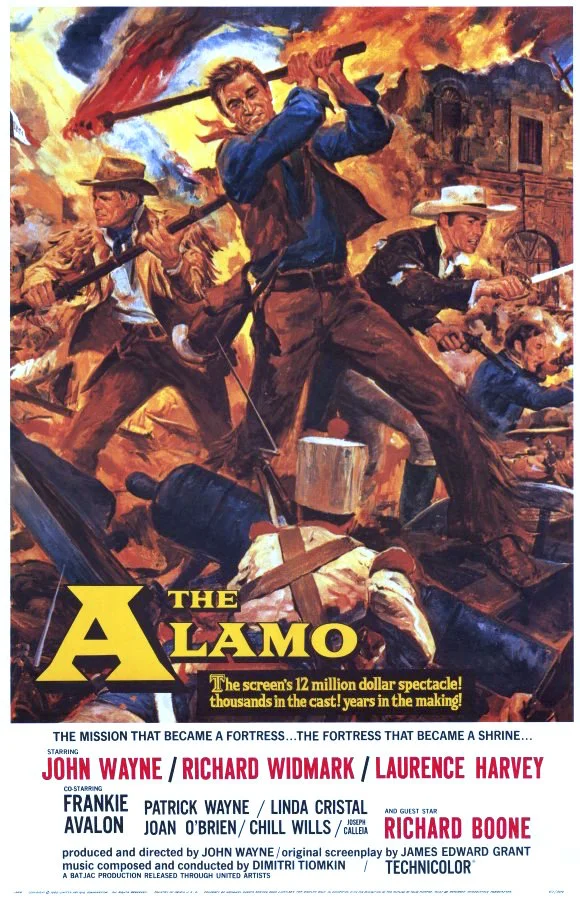
Released in 1960 and helmed by John Wayne, The Alamo stands as a complex entry in both cinema history and Wayne's filmography. This film, ostensibly a tribute to the legendary battle for Texan independence from Mexico, reflects not only Wayne's cinematic ideals but also his ambitious drive to create an enduring piece of American folklore. Hailed by some as a spectacle and derided by others as a vanity project, the film is emblematic of a certain era in Hollywood that sought to explore themes of heroism and sacrifice while often glossing over historical accuracy and nuanced perspectives.
Reviews of The Alamo reveal a critical consensus that sees the film as a muddled retelling of events, with significant directorial missteps that lead to inconsistent pacing and emotionally flabby moments. Critics have emphasized its bloated runtime and ponderous narrative structure, which detracts from the urgency of the story being told. While some laud Wayne's efforts, attempting to capture the essence of leadership in a dire situation, many consider the performances unconvincing and at times stilted, leading to an overall impression of forgettable portrayals in a context that demanded authenticity.
A recurring theme in critiques revolves around the film's commercial aspirations, often overshadowing its artistic integrity. The ambitious scale and considerable budget do not translate proportionately to a compelling narrative, creating an experience that is sometimes characterized as expensive and underwhelming. While Wayne might have seen himself as an artist seeking to immortalize a pivotal event in American history, many viewers find the result to be an unnecessary and uninspired exercise that struggles to resonate beyond its historical backdrop.
Moreover, The Alamo is not immune to accusations of historical inaccuracies and racial subjugation. Critics have pointed out that the film fails to adequately represent the multifaceted reality of the period, painting a simplistic and often glorified narrative of white heroism while sidelining the complexities of Mexican perspectives. Such portrayals can feel offensive and are indicative of a larger trend in Hollywood films of the time, which often prioritized a specific mythos over a genuine exploration of cultural intersections.
As a cinematic artifact, The Alamo encapsulates a tension between the glorification of American exceptionalism and the unsettling realities of its historical implications. While the film persists as a conversation starter for its themes of leadership and sacrifice, the overwhelming critique of poor acting and historical inaccuracies serves as a reminder that the retelling of folklore in cinema can both inspire and deceive. Ultimately, The Alamo emerges as an ambitious but flawed project that reflects the aspirations and limitations of its time, leaving viewers to grapple with what is lost in the translation of history to film.