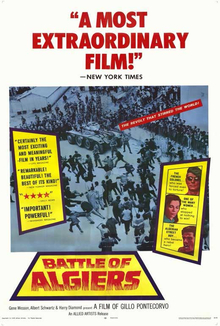
Gillo Pontecorvo's The Battle of Algiers, released in 1966, is a cinematic landmark that transcends its historical context to offer an unflinching portrayal of colonialism and the struggle for liberation. Set against the backdrop of the Algerian War of Independence, the film captures the intense urban warfare that defined the conflict, exploring the intricate dynamics of resistance and counter-terrorism. Pontecorvo's work stands as a testament to the power of cinema to document and engage with the complexities of social and political upheaval, marking a significant moment in both his oeuvre and the broader landscape of revolutionary filmmaking.
Critics have consistently hailed The Battle of Algiers for its gripping realism and intense depiction of violence and resistance. The film's portrayal of the Algerian struggle against French colonial rule is as relevant today as it was during its release, echoing contemporary concerns around imperialism and the ethical implications of warfare. Pontecorvo's direction, combined with the masterful cinematography of Gianfranco Lazzaro, immerses the audience in the conflict, making each explosion and act of defiance feel both immediate and impactful. This realistic aesthetic serves to highlight the bittersweet nature of liberation movements, which often involve tragic sacrifices and moral complexities.
The critical consensus positions The Battle of Algiers not merely as an anti-colonial film but as a broader examination of warfare's chaotic and often brutal nature. The narrative does not shy away from depicting the harsh realities of both the colonial oppressors and the resistance fighters, maintaining a fair-minded perspective that recognizes the motivations behind each side's actions. This duality enriches the film’s thematic depth, encouraging viewers to grapple with the notion that violence begets violence in the quest for freedom. Pontecorvo’s approach is as illuminating as it is raw, reminding audiences of the horrific price of conflict.
This film has also sparked discussions around counter-terrorism strategies, making it a relevant piece for contemporary audiences interested in the ethics of modern warfare. Its influence can be seen in a multitude of films and documentaries, as well as in academic discourse surrounding colonialism and resistance. In this way, The Battle of Algiers functions not only as a historical artifact but as a continuing commentary on the struggle against oppression, serving as a mirror for various liberation movements across the globe.
Ultimately, The Battle of Algiers is a brilliant and riveting masterpiece that continues to resonate with audiences, reflecting the universal themes of human resistance against oppression and the cycle of violence that often ensues. Its impact endures, illustrating how storytelling can challenge and provoke thought on the most pressing issues of our time. Pontecorvo's work remains a critical piece in understanding not only the Algerian War but also the broader narrative of colonialism and resistance that shapes our world.