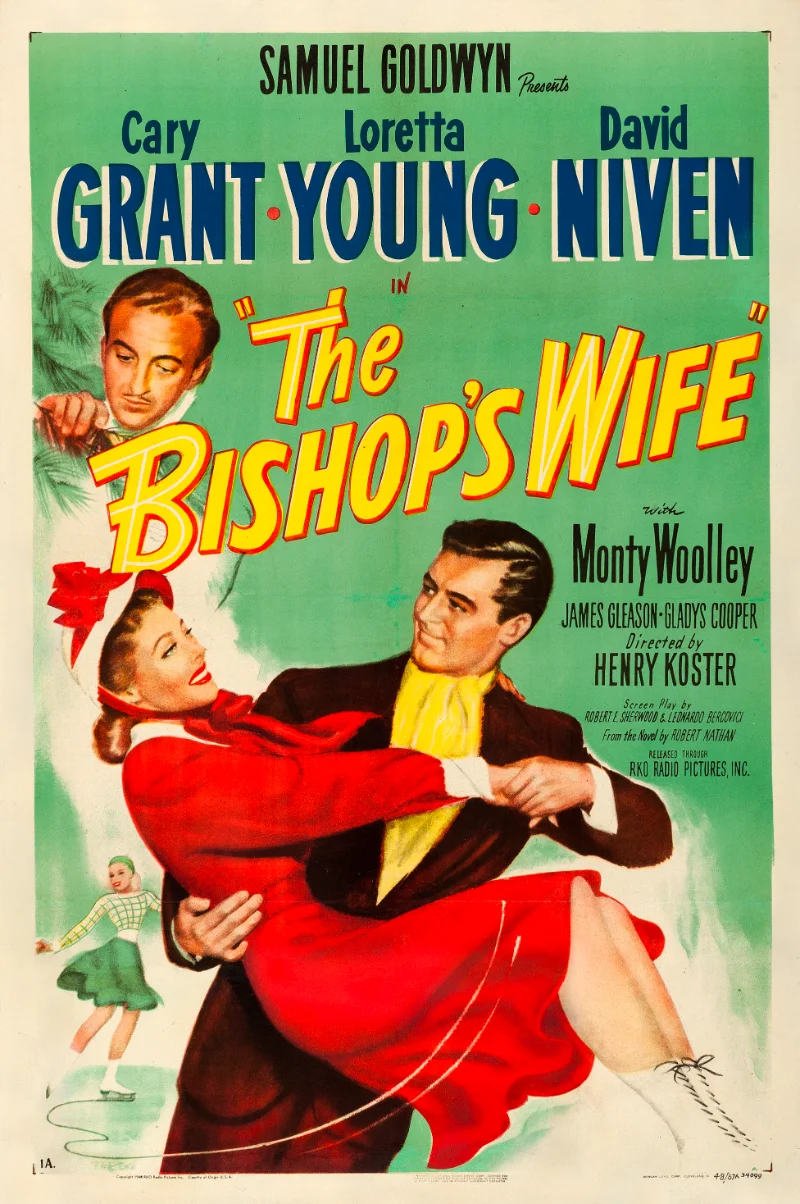
Paying homage to the Christmas spirit, The Bishop's Wife (1947), directed by Henry Koster, remains a staple in classic cinema, blending whimsy with warmth in a manner that resonates even today. As Koster's most significant holiday offering, the film casts a charming spell that captures the essence of love and faith during the festive season, making it a personal favorite among audiences and critics alike. This enchanting tale combines Koster's skill for Theatrical storytelling with a subtly layered narrative, inviting viewers to reflect on the intersections of faith, love, and community as embodied in the holiday spirit.
At its core, The Bishop's Wife explores themes of angelic intervention and marital dynamics, engaging with the struggles of modern life through the lens of an extraordinary messenger from above. Cary Grant’s portrayal of Dudley, the charming angel who descends to aid Bishop Henry Brougham, unfolds a heartwarming tale that juxtaposes celestial wisdom with earthly dilemmas. The film delicately examines the strains in the Brougham's marriage; while Duke (David Niven) is caught up in his ambitions, his wife Julia (Loretta Young) longs for tenderness and connection. Through Dudley’s intervention, she reacquaints herself with her own desires, revealing a timeless narrative about rediscovery and the importance of relationships amidst worldly distractions.
Critics have hailed The Bishop's Wife for its ability to beautifully marry sentimentality with humor, creating a whimsical yet profound experience. The film’s charm stems from its character-driven narrative, where each interaction is vibrant and relatable, wrapped in a charmingly theatrical presentation. The angelic Dudley does not impart grand revelations but instead inspires through small acts of kindness and understanding, helping to reinforce the importance of love and togetherness during the Christmas season, a sentiment that echoes throughout the film and continues to resonate with audiences.
As a piece of cinema history, The Bishop's Wife occupies a significant space in the realm of holiday films, offering a unique blend of the fantastical and the familiar, bridging the gap between the spiritual and the mundane. Its nuanced storytelling, coupled with the warm performances from its lead trio, creates an experience that is both heartwarming and amusing. Each viewing offers a gentle reminder of what truly matters, faith, family, and the spirit of giving that Christmas embodies.
In a world increasingly dominated by materialism, The Bishop's Wife serves as a refreshing counterpoint, drawing viewers in with its simplicity and sincerity. The film invites audiences to embrace the deeper meanings of the holiday season and the vital connections they foster in our lives. As it continues to air on screens during the festive season, its messages remain timeless and poignant, ensuring its place not just as a holiday classic, but as a film that resonates with universal truths regarding love and devotion.