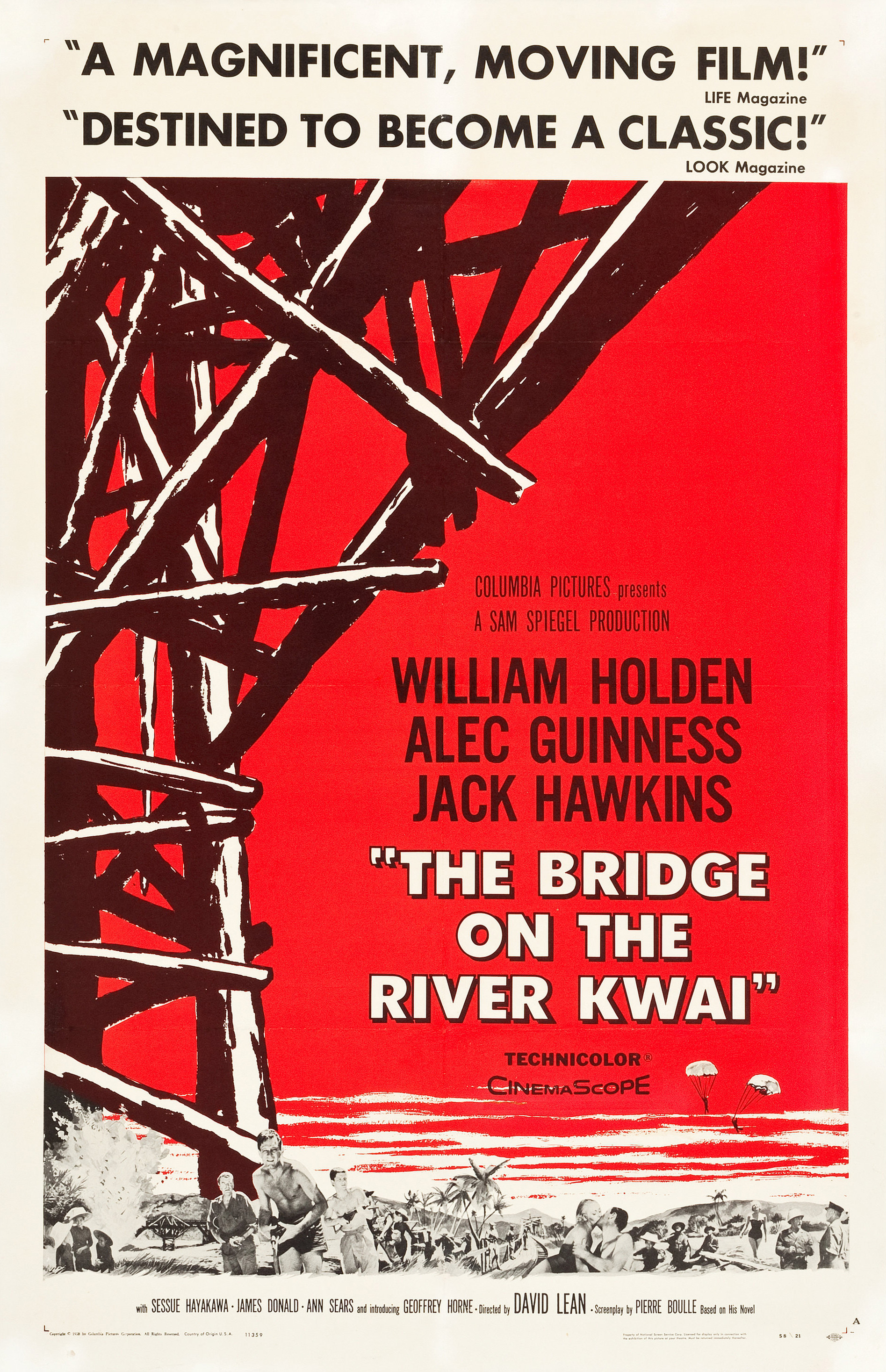
David Lean's The Bridge on the River Kwai stands as a monumental work in cinema history, emerging from an era that increasingly sought to explore the intricate intersections of morality, leadership, and the individual psyche within the context of war. Released in 1957, the film brought a masterful blend of expansive storytelling and psychological depth, characteristics that would define much of Lean's oeuvre. Renowned for his sweeping landscapes and meticulous attention to character evolution, Lean adeptly captures the timeless struggle between human will and the oppressive structures of military discipline, encapsulating the very madness and pride that can emerge in wartime scenarios.
Critical consensus on The Bridge on the River Kwai recognizes its profound exploration of obsessive honor and class systems, as epitomized by Colonel Nicholson, portrayed by Alec Guinness. His fierce dedication to duty leads to a complex narrative where the militaristic pride in building a seemingly glorious bridge devolves into an ironic commentary on the futility and absurdity of war. Audience members are swept into a psychological tension that not only grips the characters but also resonates deeply with viewers, inviting them to wrestle with their own perceptions of honor and moral ambiguity in times of conflict. This interplay of personal and collective struggles forms the backbone of the film, making it as suspenseful as it is thought-provoking.
Lean's directorial choices imbue the film with a humanistic quality, allowing for an understanding of characters' motivations while still portraying the harsh realities of their existence as prisoners of war. The stark contrasts between the oppressors and the oppressed invite viewers to reflect on the psychological ramifications of war, the absurdities of strict military hierarchy, and the cost of obsessive leadership. The film’s ability to synthesize entertainment with a complex moral narrative has secured its place as a classic, both in the context of Lean's career and within the broader landscape of war films.
Ultimately, The Bridge on the River Kwai is an epic reflection on the intricate dance between madness, pride, and the human spirit's resilience. It serves not only as a gripping historical drama but as a profound meditation on the contradictions of honor and the chaotic nature of war. The film's enduring reputation stems from its ability to blend thrilling narrative tension with incisive social commentary, making it a remarkable study of how far individuals will go in the name of perceived duty, ultimately questioning the honor in destructive pursuits.