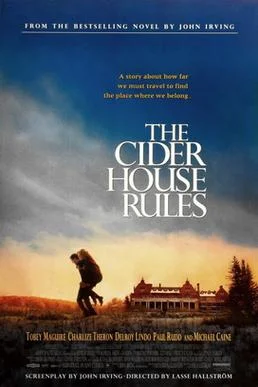
Lasse Hallström’s The Cider House Rules, adapted from John Irving’s novel, sits as a thoughtful representation of the late 1990s cinema that grappled with pressing social issues. Known for his sensitive storytelling, Hallström directs a film that intertwines complex themes such as abortion rights and moral dilemmas within a coming-of-age narrative. The film offers a poignant examination of family dynamics, set against the backdrop of a morally ambiguous world where choices carry profound significance. Hallström effectively crafts a tale that echoes the societal debates of the era, placing it firmly within a context of heightened sensitivity towards personal autonomy and ethical questioning.
Critics have noted the film's engagement with the theme of abortion rights, presenting a narrative that is unapologetic in its exploration of the subject. The protagonist, Homer Wells, portrayed with a nuanced sensitivity, embarks on a journey of self-discovery that challenges him to confront the intricacies of morality. His relationship with Dr. Larch, a figure who embodies both care and controversy, brings to light the emotional weight of the choices that women face regarding their bodies. This duality in the narrative fosters a gripping exploration of moral ambiguity, making The Cider House Rules both timely and timeless, as it reflects the perpetual conflicts surrounding reproductive rights.
Yet, the film has not been without critique. Some reviewers found the narrative to be somewhat incoherent and overly sentimental, arguing that it veered into the realm of manipulation. Despite its engaging storyline, there are moments when the emotional breadth feels forced, leading to a sense of imbalance in its delivery. These criticisms, while valid, do not overshadow the film’s deep emotional core, which resonates with audiences looking for introspective storytelling during a period ripe with moral questioning.
The exploration of incest within familial relationships also surfaces as another layer in The Cider House Rules, complicating the narrative further. This idiosyncratic choice contributes to a tapestry woven with challenging subjects, prompting contemplation about the nature of love and loyalty in a familial context. Through instances of tender yet troubling scenarios, Hallström captures the essence of coming-of-age, illustrating not only the joys but also the burdens carried through personal evolution.
Ultimately, The Cider House Rules stands as a significant film in Hallström’s oeuvre, melding both the engaging and the incendiary in a compelling narrative. It is a film that invites viewers to reflect on their own values while navigating the treacherous waters of moral dilemmas. By balancing emotional storytelling with thematic depth, the film leaves an indelible mark on its audience, making it a popular yet prestigious entry in the canon of late 20th-century American cinema.