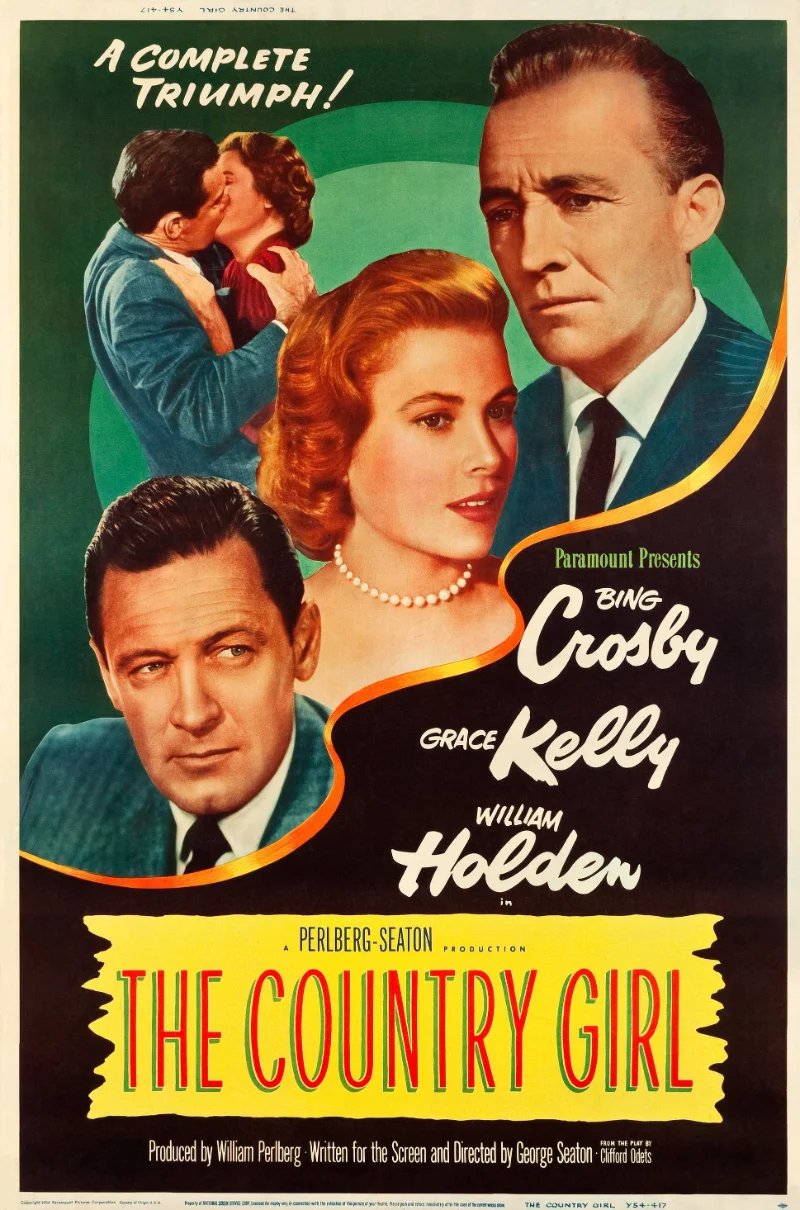
Released in 1954, The Country Girl, directed by George Seaton, occupies a unique niche within cinema history as a drama that explores the complexities of human relationships and the struggles of an artist's life. Seaton, known for his ability to capture the intricacies of character-driven narratives, offers audiences a glimpse into the often tumultuous world of show business through the lens of a washed-up actor and his long-suffering wife. The film reflects the conventions and anxieties of its era, serving as both a product of its time and a commentary on the nature of success and personal redemption.
The film, while undeniably professional in its production quality, has been critiqued for its dated material. The narrative unfolds with a certain predictability, familiar to audiences even in the 1950s, which may render it less impactful today. Critics frequently note that the film feels a touch shoddy by modern standards, suggesting that the dialogue and scenarios have diminished in resonance over decades. However, despite these drawbacks, The Country Girl remains a watchable film, primarily due to its strong performances, particularly by its lead actors, who bring a vibrant authenticity to their roles.
One of the main themes of The Country Girl is the exploration of personal failure and the quest for redemption. This resonates through the character of Georgie Elgin, played by Grace Kelly, who grapples with her husband’s struggles amidst the backdrop of Broadway fame. The film resonates with anyone who has faced the unfairness and disappointment that often accompany creative aspirations, touching on universal themes of love, desperation, and hope. The nuanced portrayal of these themes keeps the audience engaged, inviting them to reflect on their perceptions of success and the sacrifices often required to achieve it.
Despite its flaws, the film has seen a revival of interest, aided by its notable casting. Actors like Bing Crosby and Grace Kelly, at the height of their careers, lend a sense of quality and professionalism that transcends some of the film’s narrative shortcomings. Their performances provide an emotional core that ultimately elevates the material, making it a testament to the talents of its ensemble rather than the mere date of its release. Critics have noted that it is this robust engagement with character that has allowed The Country Girl to endure in film discussions, inviting audiences to reconsider its place in the broader tapestry of 20th-century cinema.
In conclusion, while The Country Girl may be marred by its dated elements, the film remains a significant piece within George Seaton's oeuvre, not only for its exploration of personal and artistic struggle but also for its reflection on the broader societal expectations of its time. The challenges faced by Georgie and her husband serve as a poignant reminder of the human condition, ensuring that the film, despite its imperfections, offers valuable insights into the complexities of love and ambition.