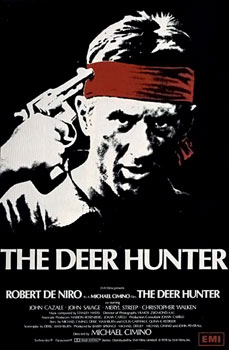
As one of the defining cinematic works of the late 20th century, The Deer Hunter, directed by Michael Cimino, remains a haunting exploration of the Vietnam War's extensive emotional and psychological repercussions. Released in 1978, amidst a period of intense societal re-evaluation of American values and military engagements, Cimino's film delves into the lives of three blue-collar friends from a small Pennsylvania town. The film depicts not only their pre-war camaraderie but also the harrowing transformation they undergo due to the devastating experiences of combat. In the broader context of cinema history, this film is notable for its audacious storytelling approach, seamlessly melding intimate character study with sweeping political commentary, which contributed to the shifting landscape of American filmmaking in the 1970s.
Critically, The Deer Hunter has garnered a reputation for its emotionally shattering narrative and unflinching portrayal of friendship, sacrifice, and the often dehumanizing impact of war. Reviewers consistently highlight the film's chilling depiction of trauma, illustrating how the brutal reality of the Vietnam War can haunt and fracture relationships. The film engages with themes of resilience and endurance, celebrating the human spirit while simultaneously exposing the heartbreaking realities faced by returning veterans. Critics often refer to its profound exploration of American masculinity, reflecting the fragility and strength inherent in male bonding under emotional duress, further punctuating the film's intricate connection to the cultural identity of working-class America.
The movie's structure unfolds through a gripping narrative that juxtaposes fleeting moments of joy and camaraderie against scenes of horrific violence and despair. This impressive blending of genres, from family drama to war epic, creates a stark contrast that amplifies the emotional stakes for the audience. The traumatic events faced by the characters, particularly in the infamous Russian roulette scenes, serve as an unsettling metaphor for the arbitrary nature of survival and the psychological toll of warfare. Cimino's vivid and intense direction invites viewers not only to witness but to endure the visceral reality faced by his characters, leaving an indelible mark on their psyche long after the credits roll.
Cimino's directorial vision, characterized by unrelenting honesty, has sparked discussions about the nature of patriotism, sacrifice, and ethnic identity within the American narrative. The portrayal of trauma and the complexities of brotherhood resonate profoundly, with critics lauding the film's ability to provoke thought and reflection on the cost of war. The haunting imagery and chilling score elevate the viewing experience, cementing The Deer Hunter as not just a film but a poignant commentary on the myriad ways war shapes and devastates lives. Its place in both American cinema and collective memory as a reflection on betrayal, loss, and the unforgiving nature of fate remains unmistakable.