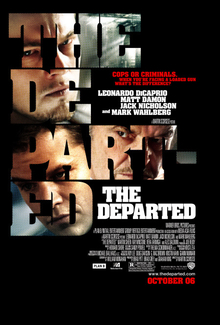
In The Departed, Martin Scorsese delivers a riveting crime drama that cements his stature as a master of cinematic storytelling. Released in 2006, this film not only revitalizes the crime thriller genre but also marks a significant convergence point in Scorsese's illustrious career. His deep fascination with themes of identity, deception, and moral ambiguity finds its most focused expression in this taut narrative. Drawing from the Hong Kong film Infernal Affairs, The Departed explores the tumultuous underbelly of Boston's crime scene, offering an unflinching portrayal of the battle between law enforcement and organized crime. It stands as a hallmark of modern American cinema, earning both critical acclaim and popular success while winning Scorsese his first Academy Award for Best Director after multiple nominations throughout his career.
The film's narrative intricately weaves together the lives of characters living under false identities. Leonardo DiCaprio’s Billy Costigan works as an undercover cop embedded within the Irish mob, while Matt Damon portrays Colin Sullivan, a mole on the police force planted by the same crime syndicate. This duality, where both men struggle with their identities amid layers of deception, creates a palpable tension that drives the plot forward. Scorsese's trademark style is evident through the film's brash execution and its violent set pieces, which highlight not only the stakes of such a life but also the frustrations and consequences of deceit.
Critics have frequently noted that The Departed is both excessive and entertaining, plunging viewers into its brutal universe with relentless pacing and shocking moments of violence. The film skillfully balances the suspense typical of a thriller with resonant themes of betrayal and loyalty, ultimately crafting a citizen’s moral vacuum. As the layers of the protagonists' lives unfold, Scorsese compels audiences to confront their own perceptions of truth and integrity in a world where trust is a rare commodity.
At its core, The Departed serves as a mirror reflecting the chaos of identity within a lawless environment. The film presents a bracing examination of how one can lose oneself in the labyrinth of undercover operations. Every twist and turn prompts a reflection on the cost of deception, not just to the characters involved but also to the viewers who are drawn into their tangled fates. Scorsese's audacious storytelling engages the audience intellectually while also delivering the visceral thrills they expect from a crime film.
Ultimately, The Departed stands as a testament to Scorsese's enduring prowess in the crime genre, weaving a complex tapestry of human experience where violence, authenticity, and moral ambiguity collide. Its blend of entertainment and introspection ensures its place as a modern classic, resonating with audiences and critics alike as a bold exploration of the darker aspects of the human psyche. In a cinematic landscape often saturated with formulaic narratives, The Departed boldly charts its own course, securing its legacy as not only a thrilling crime thriller but also a profound inquiry into the nature of identity and deception.